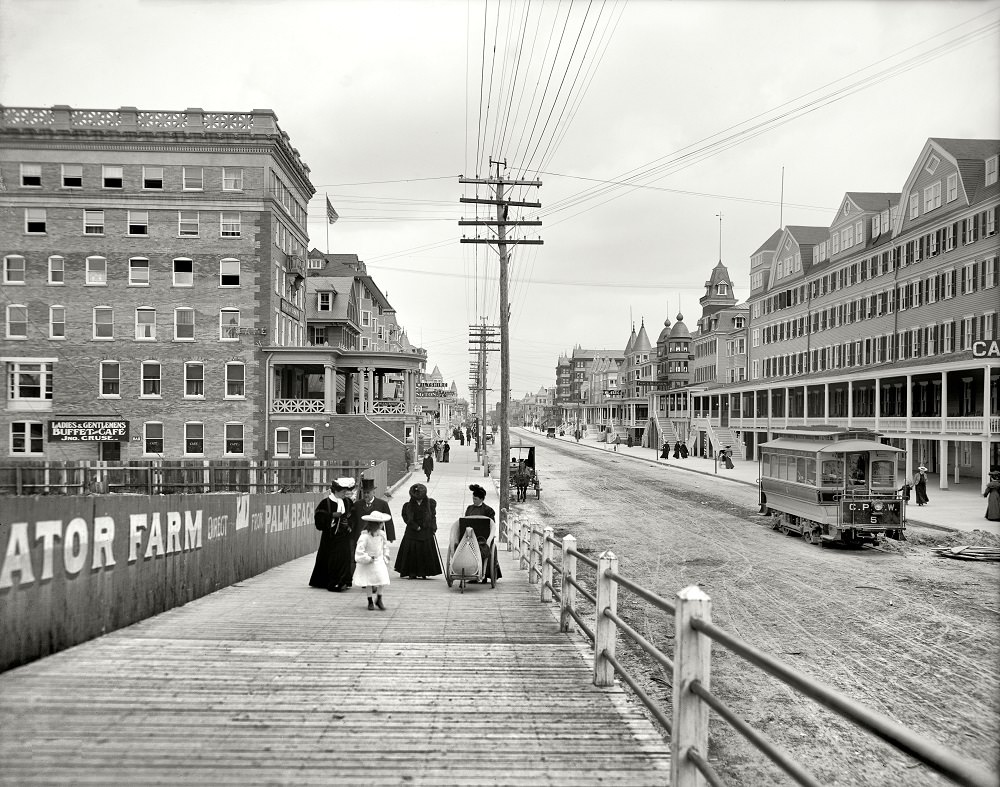
Virginia Avenue in Atlantic City feels like a corridor of motion in this circa-1905 scene, where pedestrians claim the boardwalk while the street beside it stays busy with wheeled traffic. Women in long dresses and broad hats stroll at an unhurried pace, a child in light clothing steps forward, and a few figures pause as if deciding where the afternoon will take them. The perspective pulls the eye down the avenue, making the seaside resort’s daily rhythm readable at a glance. To the right, a compact streetcar waits along the roadway, its boxy form echoing the straight lines of the grand hotels and boardinghouses that stretch block after block. Tall utility poles and a web of overhead wires mark the modern infrastructure that made Atlantic City’s neighborhoods and attractions easier to reach, even for visitors unfamiliar with town. Porches, dormers, and turreted rooftops create a layered skyline that speaks to a booming resort economy and the competition to house summer crowds. Along the left edge, a bold painted advertisement on a fence hints at the commercial spectacle that surrounded the boardwalk experience, where entertainment and marketing blended into the same visual field. The mix of “strollers and rollers” captures an era when leisure, public display, and urban technology met on the same strip of planks. For anyone exploring early 20th-century New Jersey history, this Virginia Avenue photograph offers a vivid snapshot of Atlantic City street life—equal parts promenade, transit hub, and stage.
#60 Virginia Avenue strollers (and rollers) in Atlantic City, New Jersey, circa 1905.