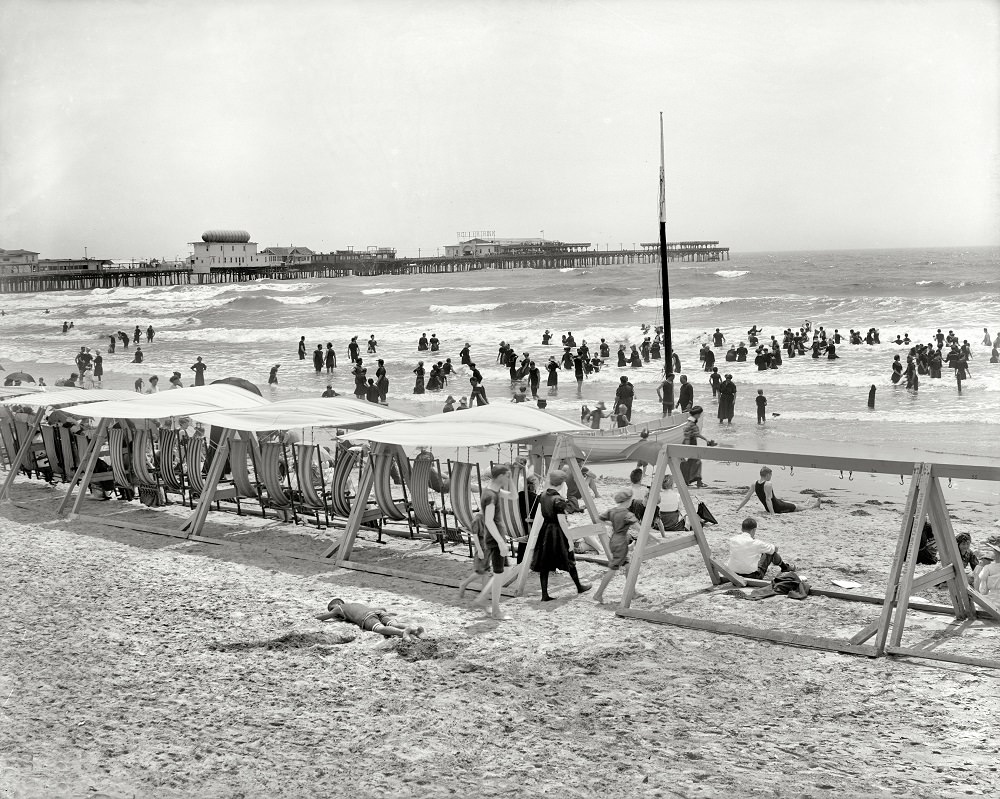
Summer energy ripples across the Atlantic City shoreline in 1906, where clusters of bathers crowd the surf and turn the waterline into a lively social scene. Dark, modest swimwear and upright postures hint at the era’s etiquette even as people splash, wade, and test the waves. Farther out, a long pier stretches into the sea, anchoring the horizon and reminding viewers that seaside leisure was already a carefully built attraction. On the sand, rows of canopy-topped beach chairs line up like a small outdoor parlor, offering shade and a front-row view of the ocean. Children and adults drift between the seating and the shore, some pausing to watch the breakers while others hurry toward the water. The mix of resting bodies, strolling figures, and tightly packed swimmers captures the beach as both playground and promenade. Atlantic City’s early-20th-century beach culture comes through in the details: organized rentals, bustling crowds, and the constant pull between relaxation and spectacle. For anyone searching for a glimpse of American coastal tourism, this photograph offers a rich look at how public recreation and modern leisure took shape along the boardwalk era’s surf. It’s a reminder that even in 1906, the seaside was a shared ritual—part escape, part performance, and wholly communal.