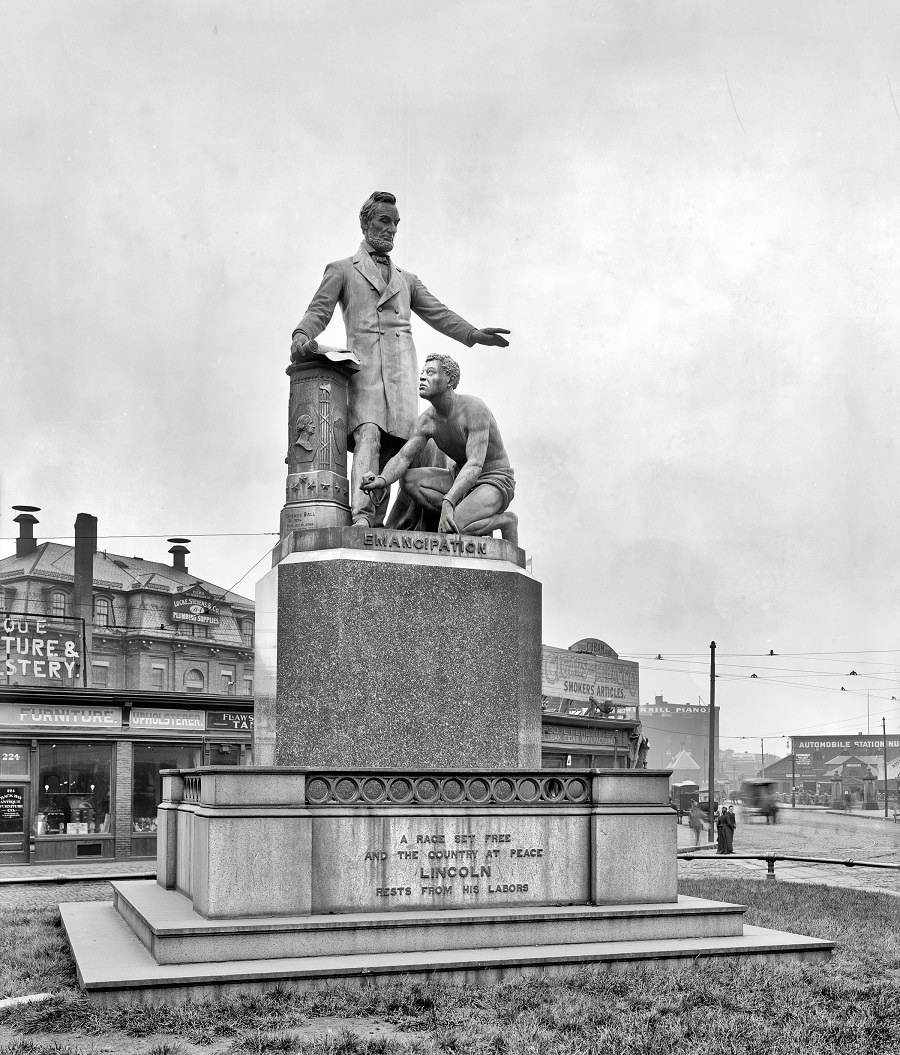
Rising above Park Square, the Lincoln statue anchors the scene with a commanding figure in a frock coat, one hand extended as if addressing the city. At the base, a second sculpted figure crouches beside the word “EMANCIPATION,” adding a stark, human counterpoint to the president’s calm posture. The monument’s granite pedestal and carved lines of dedication emphasize how public memory was literally set in stone in Boston.
Around the memorial, early-20th-century Boston life unfolds in storefront signs, low brick buildings, and a web of overhead wires that hints at streetcars and a rapidly modernizing streetscape. The open square feels like a crossroads where commerce, transit, and civic ceremony meet, with small figures at street level dwarfed by the monument’s scale. Even without a crowd, the composition suggests this was a place designed to be noticed—an everyday route made into a civic stage.
For readers interested in Boston history, Park Square, or Abraham Lincoln monuments, this 1906 view offers a layered look at how the city framed national ideals in a bustling urban setting. The careful balance between sculpture and surrounding street detail makes the photograph more than a record of a statue; it’s a snapshot of how people once moved through a landscape of remembrance. As architecture and advertisements compete for attention, the memorial still holds the center, quietly insisting on its message.