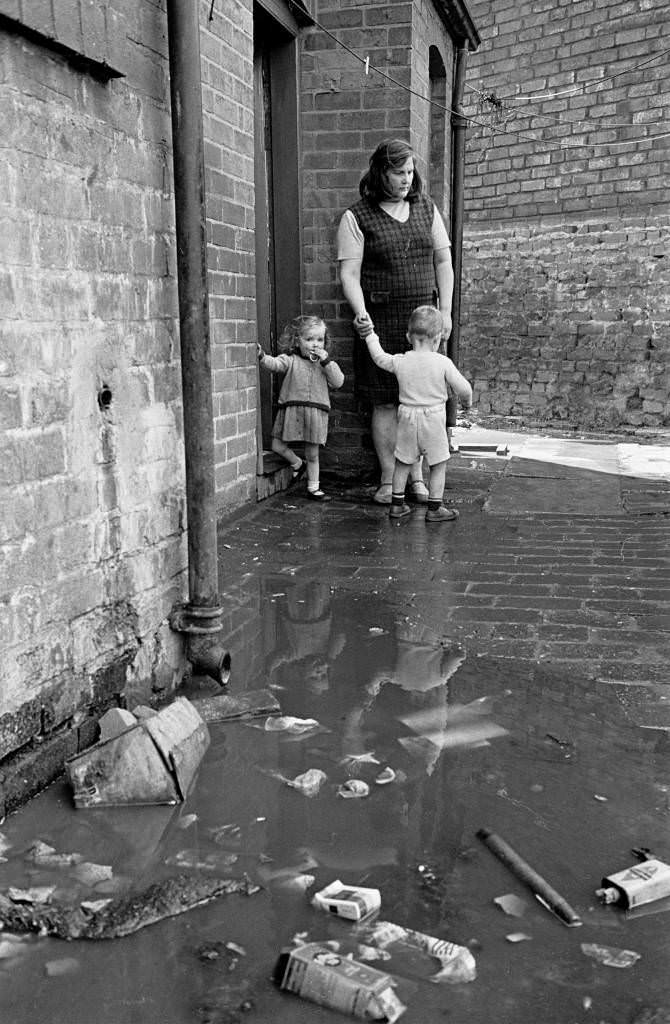
Outside a brick doorway in Winson Green, a mother pauses with two small children as dirty water spreads across the paving stones. The title, “Overflowing drains Winson Green 1971,” points to a familiar urban nuisance turned daily hazard: a blocked outlet sending wastewater into the yard. Litter floats in the shallow flood, and the wet sheen on the ground catches the light, making the whole scene feel cold and uncomfortable.
Laundry lines and closely packed walls hint at back-of-house living, where yards and passages doubled as play space, work space, and the route in and out. The adults’ steady stance and the children’s tentative steps suggest a moment of caution—how to navigate home when the ground itself is unpleasant and unsafe. Details like the drainpipe, damp brickwork, and scattered packaging bring a documentary immediacy that makes this more than a “bad day”; it’s a snapshot of routine conditions in parts of the city.
As a piece of 1970s social history, this photograph speaks to sanitation, housing maintenance, and the overlooked infrastructure that shapes neighbourhood life. For readers searching Birmingham history, Winson Green memories, or images of everyday life in 1971, it offers a stark reminder that civic problems were often experienced at the doorstep. “Places & People” fits perfectly here: the place sets the hardship, and the people—especially the children—give it its lasting human weight.