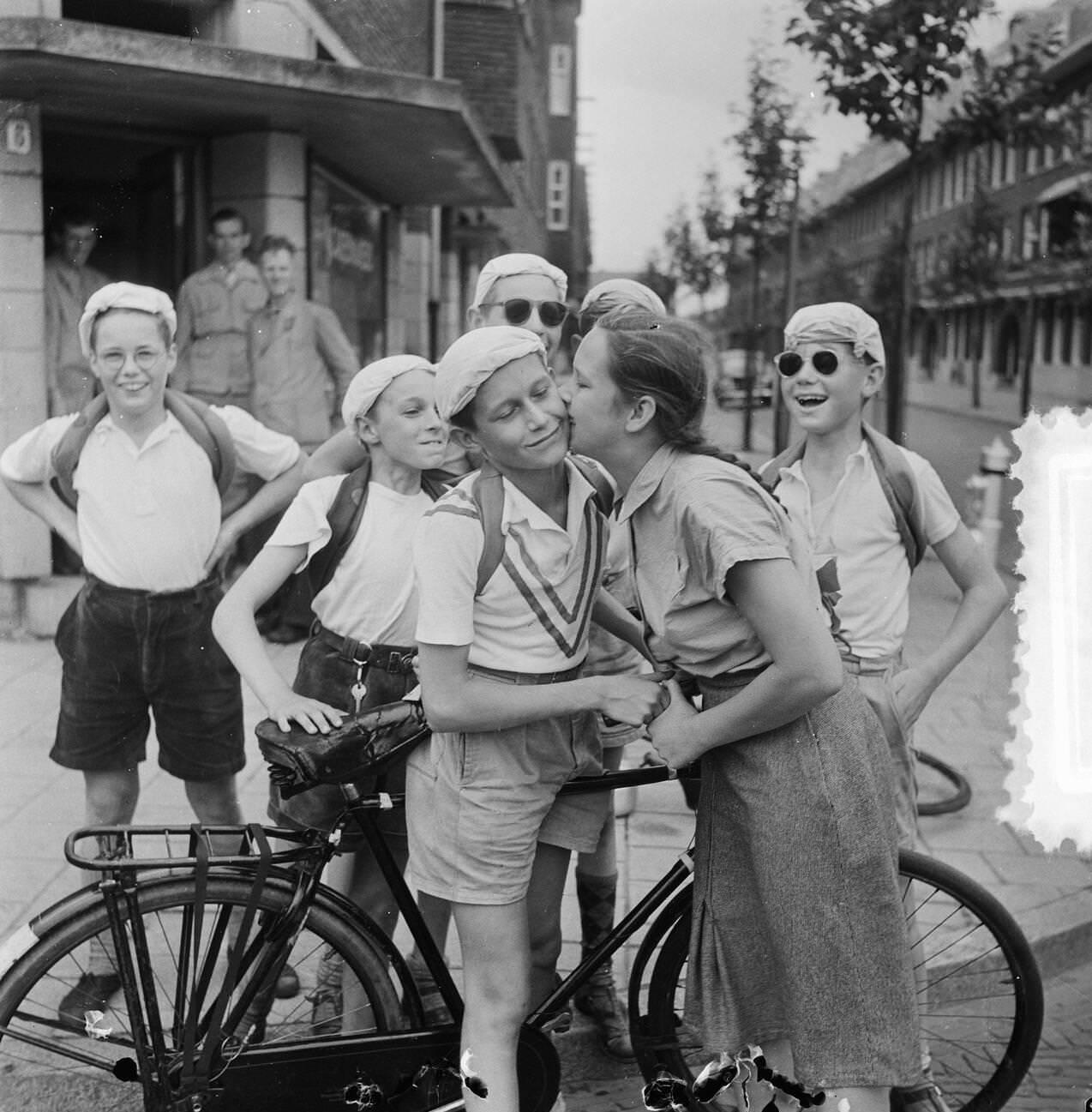
Sunlight and street-side chatter frame a buoyant moment from the Tour de France era of 1953, when boys with headscarves and easy confidence gather around a sturdy bicycle. One leans into the handlebars as a girl plants a quick kiss on his cheek, while friends in round sunglasses grin at the small celebration. Behind them, storefronts and a quiet roadway suggest the everyday town life that often surrounded cycling’s grandest spectacle.
Details in their clothing and gear evoke mid-century youth culture: short-sleeved shirts, neatly belted shorts, and the practical, utilitarian bike built for miles rather than show. The group’s relaxed posture feels less like a formal competition portrait and more like a candid pause between rides, as if they’re staging their own miniature Tour de France on local streets. Even without race banners or numbered jerseys, the pride and play-acting of endurance sport are written all over their faces.
For readers drawn to Tour de France history, vintage cycling photography, and postwar European sports life, this image offers something intimate—a reminder that legendary races also inspired everyday children to imitate their heroes. The scene balances humor and tenderness, capturing the social world that formed around bicycles long before modern sponsorship gloss. It’s a warm, human snapshot of 1953 cycling culture: youthful ambition, friendship, and a wink of romance at the curb.