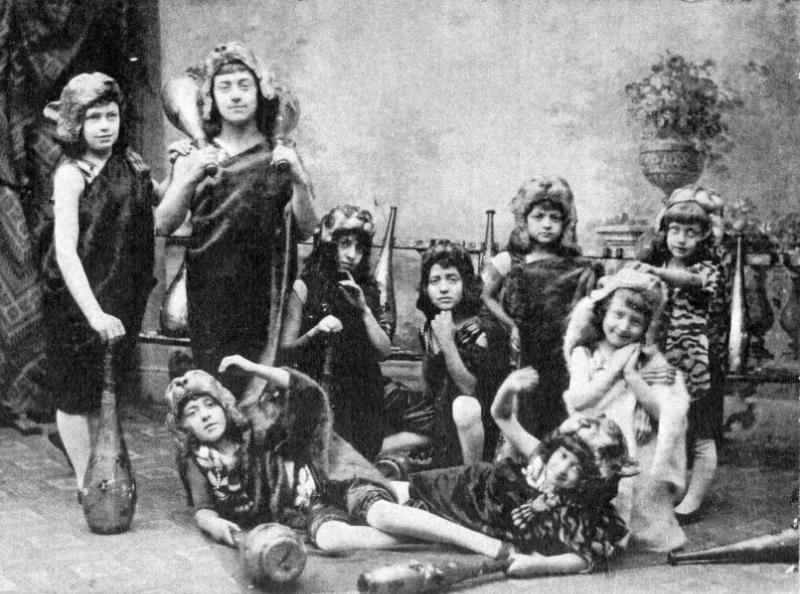
A troupe of children and young performers gathers in a studio-like setting, posed with the calm assurance of people who already know their bodies can do extraordinary things. Club-shaped juggling pins and other circus apparatus lie across the floor and lean against the backdrop, turning the portrait into a quiet inventory of skills. The costumes—simple, patterned, and practical—hint at the era’s stage aesthetics, while the confident stances suggest disciplined training rather than mere play.
The title points to the Kremos, a Swiss family whose acrobatic tradition stretched across two generations in the late nineteenth and early twentieth centuries, when family acts were a backbone of popular entertainment. In that world, children often learned early, practicing balance, strength, and timing until performance became second nature. Seen through that lens, the group’s carefully arranged formation reads like an advertisement for versatility: juggling, contortion, and ensemble staging all implied by the props and the performers’ poised expressions.
For readers interested in circus history, sports heritage, and European performance culture, this photograph offers a compelling glimpse into how athleticism and family identity could intertwine on the stage. It also underscores the often-overlooked labor behind “variety” entertainment—hours of rehearsal distilled into a single, marketable image. As a WordPress feature on the Kremos acrobats, it invites a closer look at the people behind the act and the enduring appeal of multi-generational circus artistry.