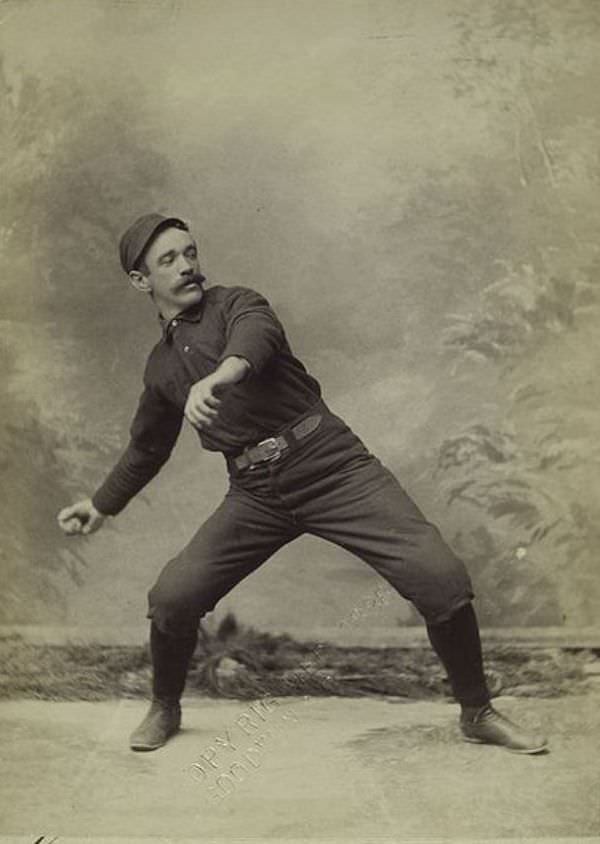
Poised mid-throw against a painted studio backdrop, a 19th-century baseball player turns athletic motion into portraiture. The stance is wide and grounded, the arm drawn back as if the next frame would finally let the ball fly, yet the careful stillness of the pose reminds you this is performance as much as sport. Even without a visible field or crowd, the photograph conveys a lively sense of anticipation and early baseball energy.
Details like the snug cap, heavy belt, and dark, woolen uniform point to a time before lightweight jerseys and on-the-run action shots dominated sports imagery. The athlete’s moustache and composed expression echo the era’s studio conventions, when photographers guided sitters into dramatic, readable silhouettes. What results is a blend of toughness and theater—part training stance, part carefully arranged advertisement for skill.
Long before newspaper sports pages overflowed with frozen moments of play, studio photos like this helped build baseball’s public image player by player. They offered fans a way to “meet” athletes through posture, costume, and attitude, turning a game into a recognizable culture. For collectors and history enthusiasts, this kind of early baseball photography is a vivid window into how America’s pastime looked, dressed, and imagined itself in its formative years.