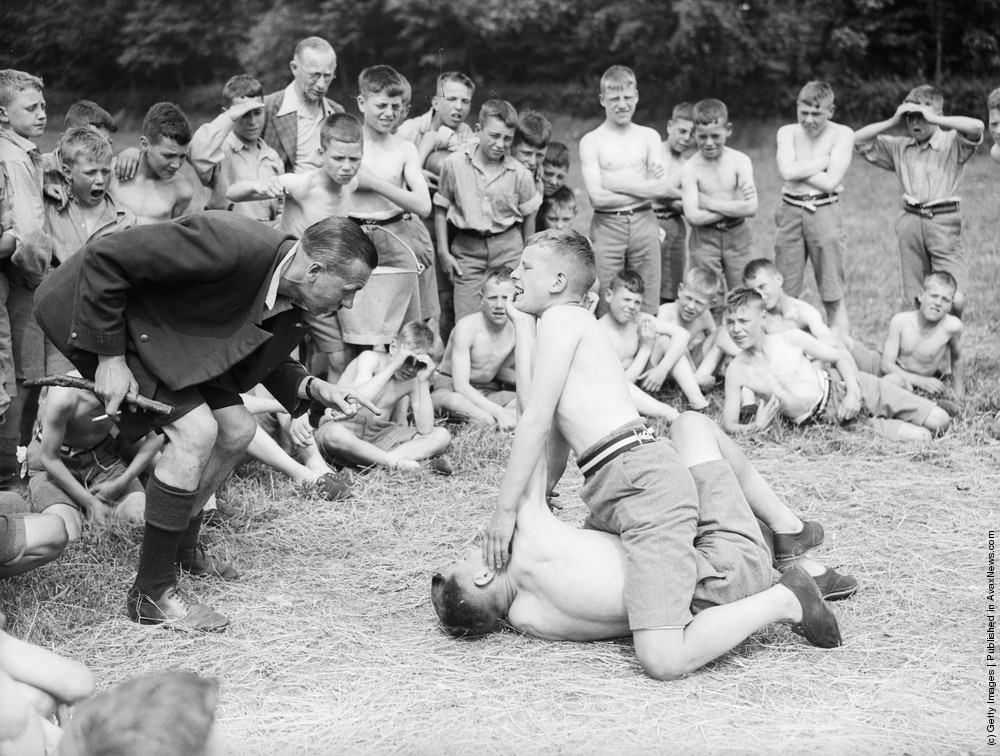
Summer at Ingham Old Hall camp in 1934 looks lively and loud, with a ring of boys gathered on the grass to watch a friendly wrestling match unfold. At the center, two campers grapple in close quarters—one straddling for control while the other braces on his back—turning an open field into an impromptu arena. Around them, shirtless spectators and others in camp shorts lean in, grin, squint at the action, and trade reactions that feel as immediate today as they did then.
A suited adult—likely a coach or camp leader—steps into the circle, bent forward and pointing as if calling a hold, giving instructions, or ensuring the bout stays fair. The contrast between his formal jacket and the boys’ summer attire highlights the structured side of camp life: supervised play, rules, and a sense of order even in rough-and-tumble sport. Trees and long grass frame the scene, suggesting an outdoor program where physical activity was central to the day’s rhythm.
Beyond the match itself, the photograph offers a rich glimpse into 1930s youth culture, recreation, and the social world of summer camps. The crowd’s tight formation, relaxed postures, and animated faces underscore how sports served as entertainment, bonding, and informal training in confidence and resilience. For anyone searching for historic camp photos, early twentieth-century outdoor sports, or British wrestling traditions in youth settings, this moment at Ingham Old Hall preserves the spirit of communal play in crisp detail.