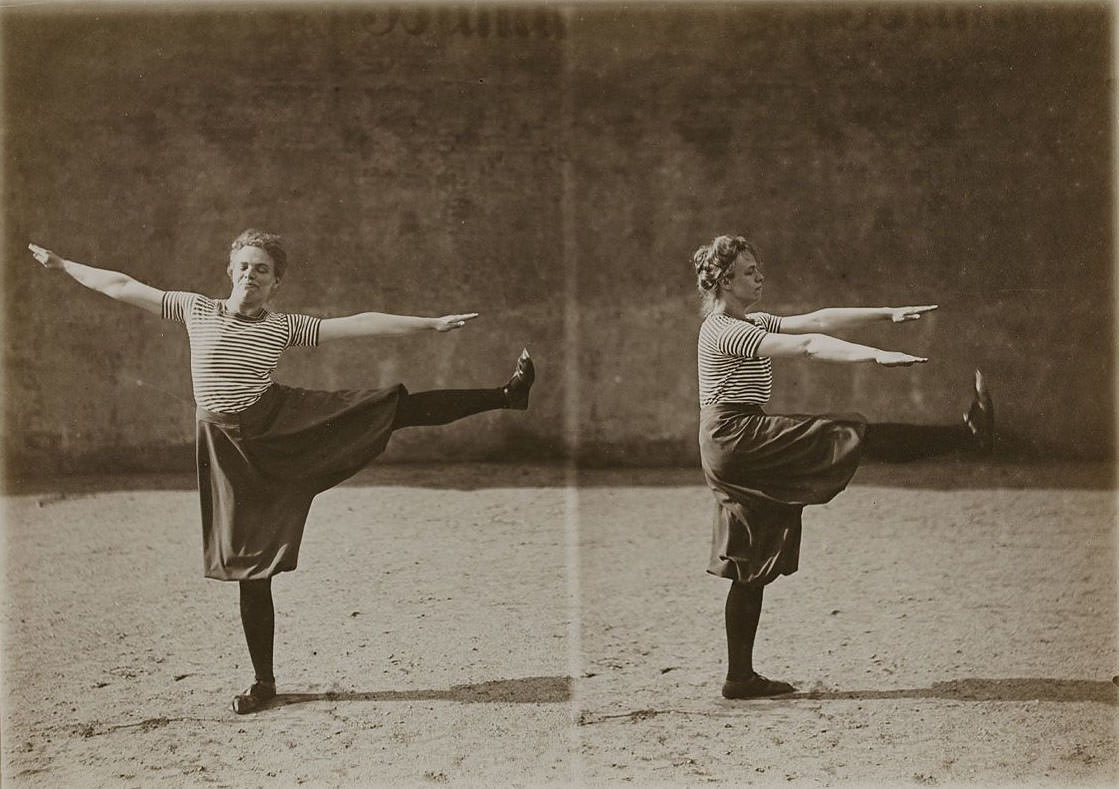
Poised on a sandy training ground, two German women hold a synchronized balance: arms extended like compass needles, one leg lifted with deliberate control. Their striped tops and dark, wide trousers read as practical athletic wear for the era, emphasizing movement over decoration. The simple backdrop keeps attention on posture, symmetry, and the quiet intensity of practice.
Swedish gymnastics—known for its disciplined, health-focused exercises—spread widely across Europe in the early 1900s, shaping physical education and organized sport. In Heinrich, Germany, scenes like this suggest a culture that valued calisthenics, coordination, and bodily strength as part of modern life. The women’s steady expressions and precise form convey training that was as much about mental focus as it was about fitness.
For readers interested in sports history and women’s athletics, this photograph offers a vivid glimpse into how exercise was taught, performed, and photographed in the 1900s. It also hints at the social spaces where women claimed room to train together, building stamina and confidence through regimented routines. As an archival window into Swedish gymnastics in Germany, the image preserves a moment of balance—both physical and cultural—at the dawn of modern sport.