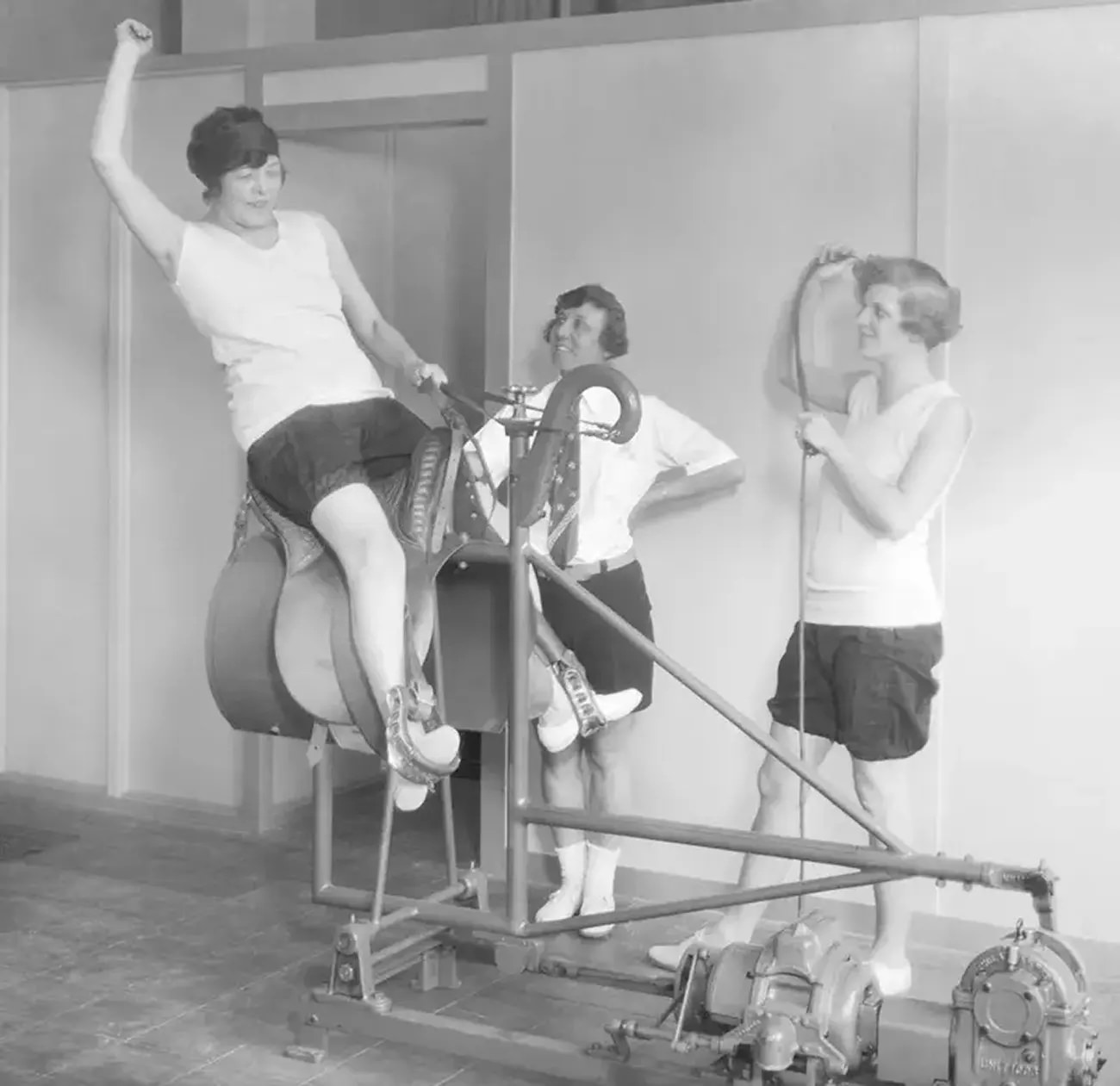
Riding a “mechanical bull” in 1928 looks less like a barroom dare and more like an earnest experiment in modern fitness. Perched on a saddle-like seat, the rider lifts an arm for balance while the contraption’s sturdy metal frame, levers, and visible motor parts suggest a machine designed to jolt, rock, or twist the body into action. The scene has the staged clarity of an early gym demonstration, where novelty and discipline shared the same floor.
Two attendants stand close by, watching and handling a cord or control, as if supervising the rhythm and safety of the ride. Their sleeveless tops and practical shorts underline the exercise theme, but the smiles hint at the entertainment value that came with these “weird exercise machines” of the past. Between the rider’s poised posture and the helpers’ readiness, the photo captures that interwar confidence that technology could train the body as efficiently as it powered factories.
Fitness history is full of inventions that promised better health through mechanical motion, and this 1928 mechanical bull belongs squarely in that tradition. It’s an eye-catching snapshot for anyone interested in vintage workout methods, early sports training, or the evolution of gym equipment from inventive curiosities to standardized machines. The result is both humorous and revealing: a reminder that today’s fitness trends have deep roots in yesterday’s mechanical imagination.