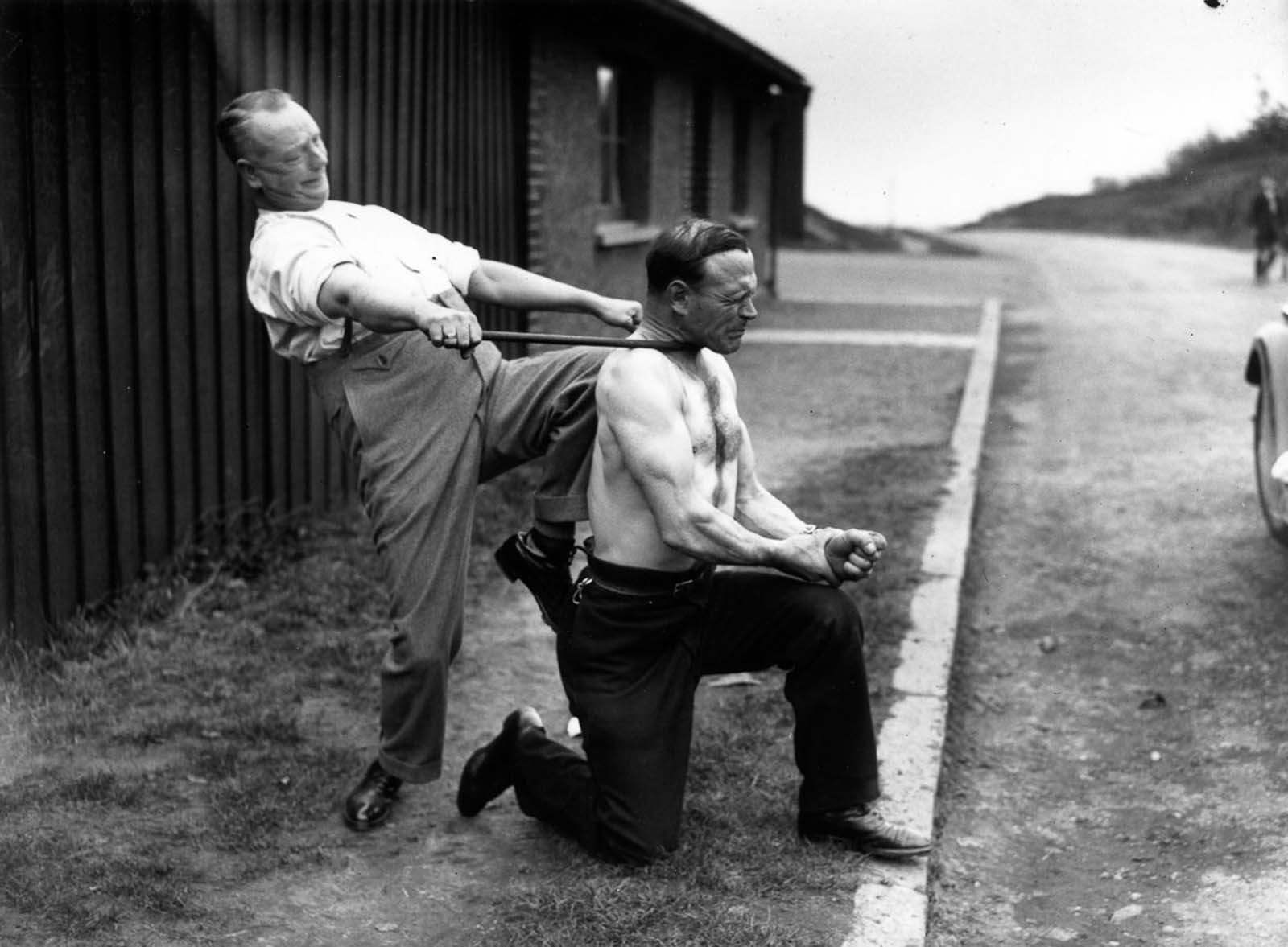
Muscle and spectacle meet on a roadside in 1935 as London strongman George Challard braces on one knee, jaw clenched, while a companion hauls back on a metal bar looped around his neck. The scene is staged with the plain confidence of interwar physical culture: rolled sleeves, working trousers, and a bare torso turned into proof of toughness. Behind them, a utilitarian building and an open stretch of road frame the feat like an impromptu outdoor stage.
What makes the moment so compelling is its mix of control and risk—Challard’s rigid posture and tight fists suggest practiced technique, not mere bravado, even as the iron visibly bows under strain. Strongman acts of the early 20th century often relied on simple materials—bars, chains, horseshoes—because the drama came from the body itself, presented as a living machine. Here, the performance is also a partnership, with the assistant’s leverage and effort heightening the tension for any onlookers just out of frame.
For readers interested in British sports history, vintage strongman photography, and 1930s London life, this image offers a vivid snapshot of popular entertainment before modern fitness marketing took over. It hints at a world where demonstrations of strength could happen in everyday spaces, turning a curbside patch of ground into a proving ground for reputation and resilience. The result is a striking piece of historical documentation—part street theatre, part athletic tradition, and entirely memorable.