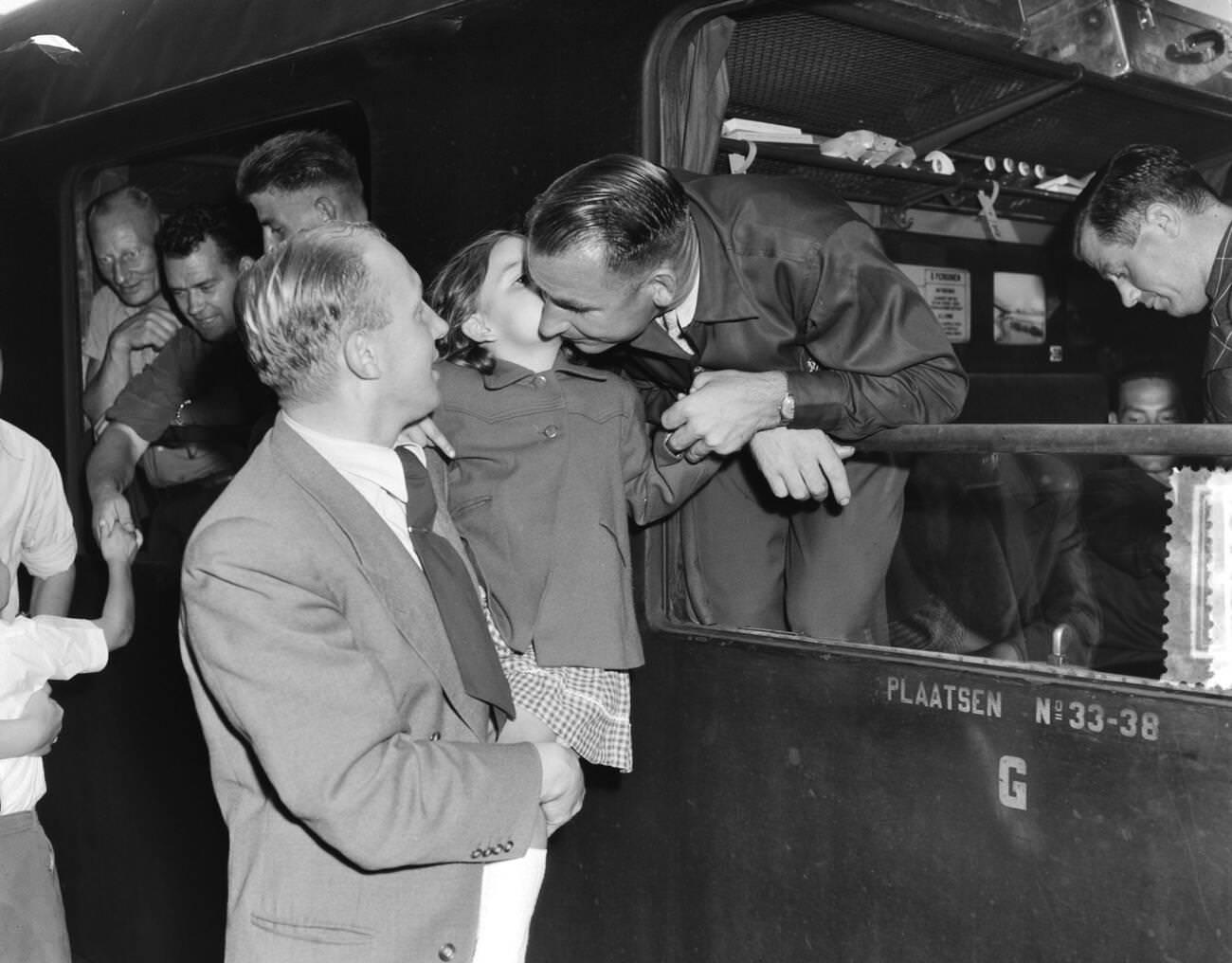
Laughter and last-minute goodbyes fill the narrow space beside a train carriage as the Dutch riders prepare to leave for the Tour de France in 1953. A supporter leans in through the open window for a farewell kiss, while faces crowd the corridor behind, eager to catch one more word before departure. The scene feels intimate and hurried, the kind of station moment where excitement and worry share the same breath.
Inside the compartment, everyday travel details sit alongside the aura of elite sport: a luggage rack above, a tight window frame, and the simple practicality of rail transport in postwar Europe. Suits and jackets mingle with the purposeful bearing of men about to face weeks of racing, suggesting that the journey begins long before the first pedal stroke. Even without bicycles in view, the tension of preparation is palpable—teams, handlers, and friends orbiting the riders as the train readies to pull away.
For cycling history fans, this photograph offers a vivid glimpse into how national squads once traveled to the world’s biggest stage, when the Tour de France started with train tickets, packed compartments, and public send-offs. It’s a reminder that the race has always been a social event as much as a sporting test, stitched together by platforms, families, and brief windows between home and the road. As a piece of Dutch sporting heritage, the image captures the human side of competition: ambition framed by affection, and a departure that already feels like the first climb.