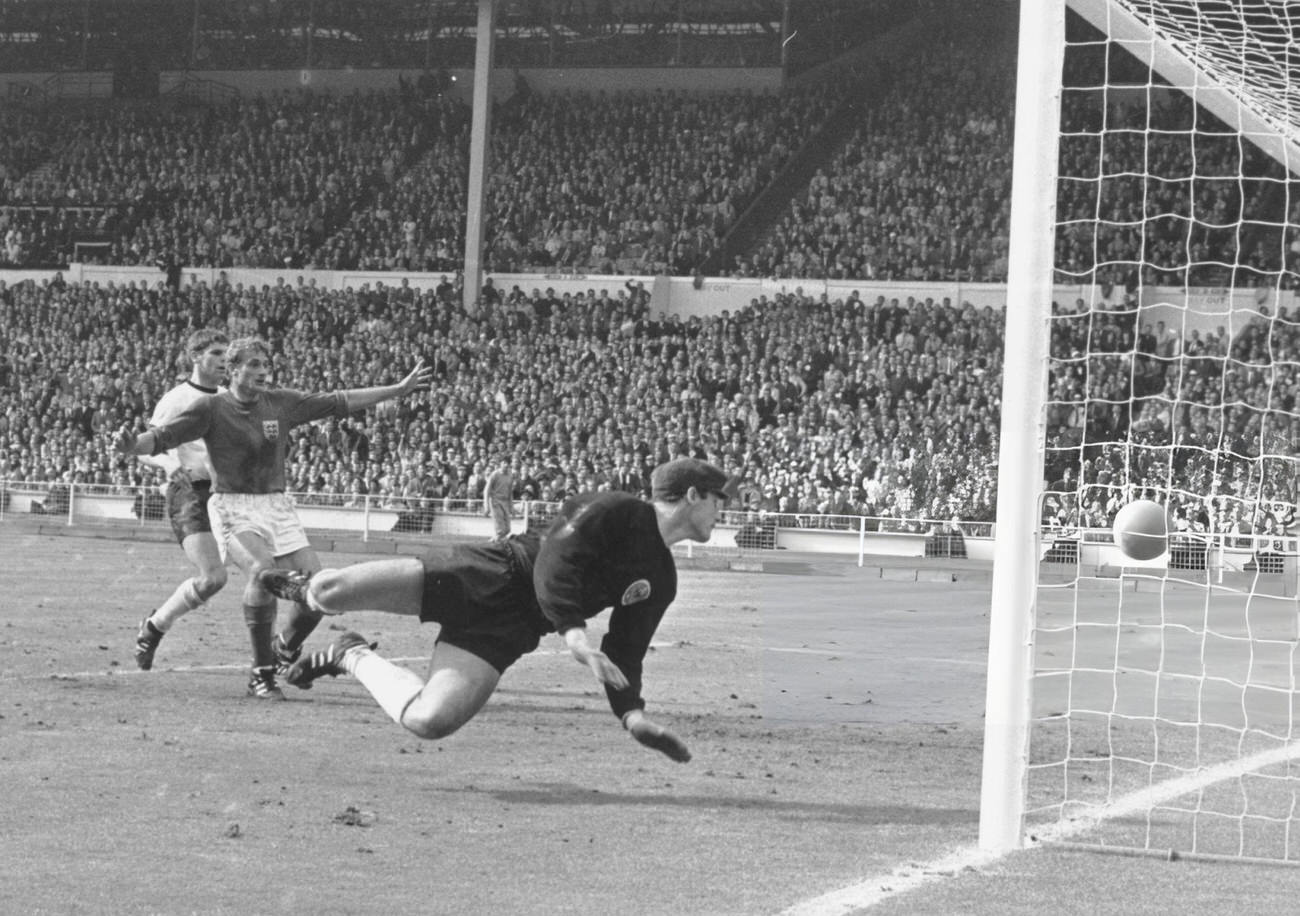
A split-second of panic and precision unfolds in the 1966 World Cup final as German goalkeeper Hans Tilkowski launches himself across the goalmouth, eyes locked on a ball skimming dangerously close to the post. The tight framing pulls the viewer right into the penalty area: the white goal frame and netting loom large, the turf is scuffed and lived-in, and the keeper’s outstretched body forms a diagonal line of urgency. Behind him, attackers and defenders hover at the edge of the action, frozen between anticipation and disbelief.
The stadium backdrop tells its own story, a dense wall of spectators packed into the stands, creating the sense of noise even in silence. An England player in the foreground gestures with arms raised, while another figure in light kit trails the play, underscoring how contested every chance was on football’s biggest stage. It’s an era defined by heavier shirts, simpler boots, and a more rugged playing surface—details that make this scene instantly recognizable to fans of classic international football.
Beyond the athleticism, the photograph speaks to the mythology of the 1966 tournament and the high-stakes drama that still fuels debate in World Cup history. Tilkowski’s dive captures the goalkeeper’s lonely burden: reacting on instinct while the entire match hangs on the next bounce, the next touch, the next decision. For readers searching for 1966 World Cup final photos, Hans Tilkowski images, or iconic moments in football history, this frame offers a vivid window into a match that remains woven into the sport’s collective memory.