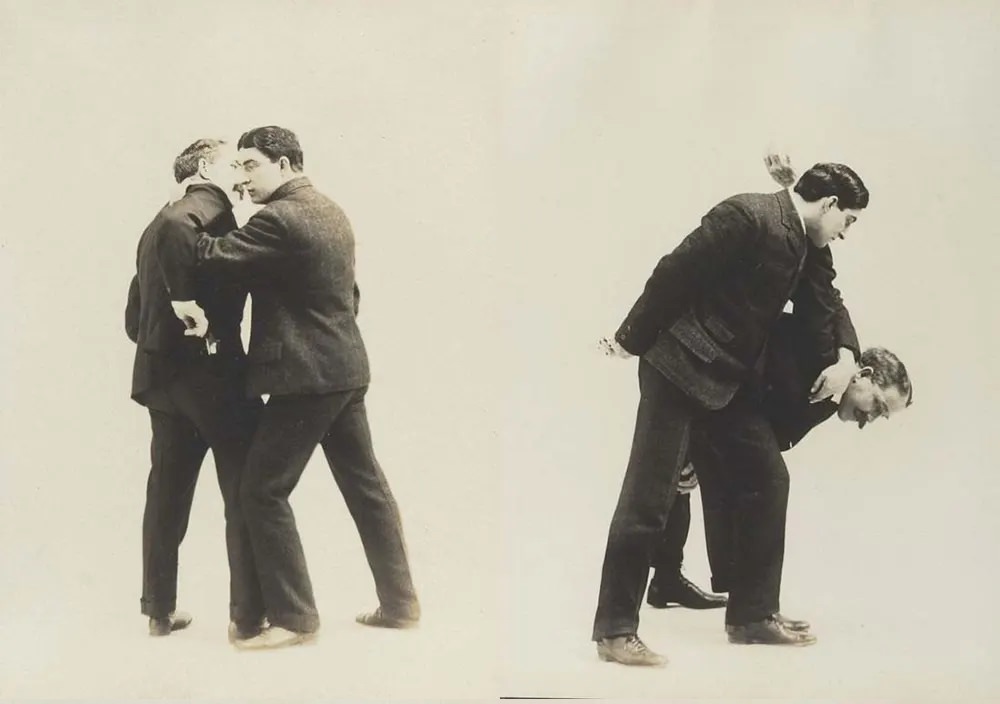
At first glance, the scene reads like a quiet studio lesson, yet the poses are anything but gentle: two pairs of men in suits demonstrate close-quarters control with practiced precision. On the left, one figure appears to pin an arm while stepping in, his partner turned partly away as if caught mid-grapple. On the right, a second demonstration shows a deeper bend and leverage at the shoulder and upper back, the defender’s stance wide and deliberate—an instructional moment frozen for the viewer.
Victorian self-defense manuals often blended sport, discipline, and social anxieties about urban life, and this 1895 guide fits squarely within that world. The formal clothing is striking, suggesting that these techniques were meant to be understood as respectable training rather than street brawling. Each arrangement reads like a step in a sequence, emphasizing grips, balance, and the mechanics of turning an opponent’s momentum against them.
For anyone interested in historical martial arts, early physical culture, or the roots of modern self-defense instruction, this photograph offers a vivid glimpse into how late-19th-century “sports” education was presented to the public. The clean background keeps attention on posture and hand placement, making the image feel like a page pulled straight from an old Victorian self-defense guide. It’s a compelling artifact for collectors, researchers, and readers exploring the intersection of history, fitness, and practical technique.