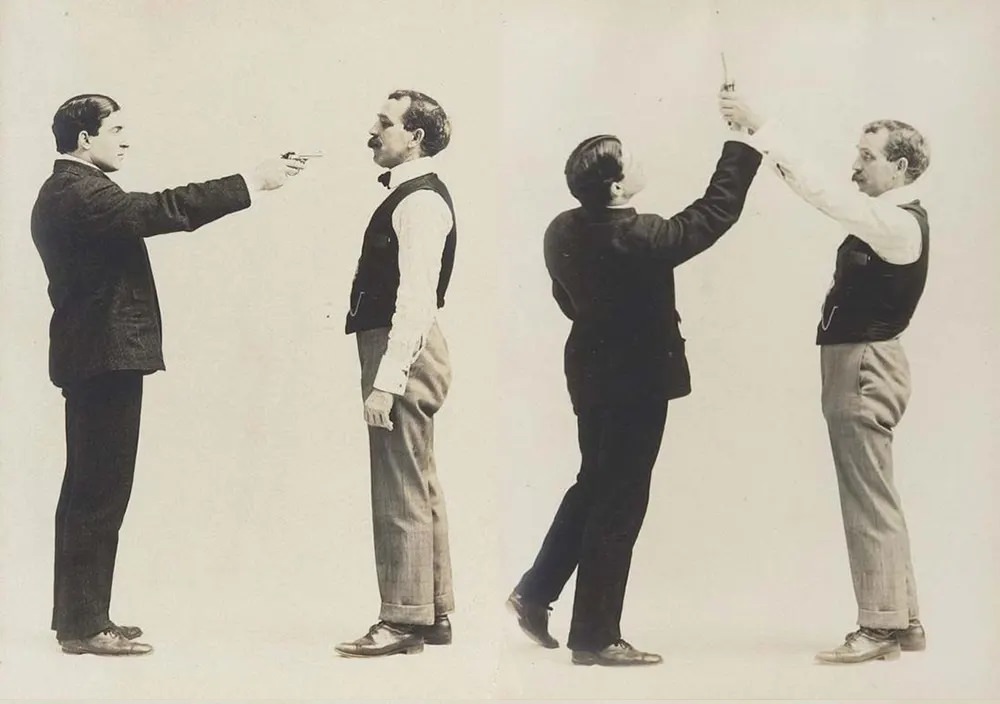
Tension and etiquette share the same stage in this 1895 Victorian self-defense guide, where two well-dressed men demonstrate how a threat might unfold and how to respond with practiced control. On the left, an attacker extends an arm as if wielding a small pistol, while the intended target stands upright and composed—an almost theatrical contrast that underscores the period’s faith in instruction and discipline.
On the right, the scene shifts to a hands-on maneuver: arms rise, bodies angle, and the defender closes distance as though redirecting or disarming the weapon. The clothing is telling—jackets, waistcoats, and neatly tailored trousers—reminding us that “sports” and personal protection were often taught within the boundaries of respectable dress and gentlemanly conduct, even when the lesson involved sudden violence.
As a piece of late Victorian sports history, the photograph works like a frame from an early training manual, presenting self-defense not as brawling but as a set of repeatable techniques. Readers interested in historical martial arts, antique self-defense methods, and Victorian-era physical culture will find plenty to study in the stance, spacing, and staged progression from threat to counter.