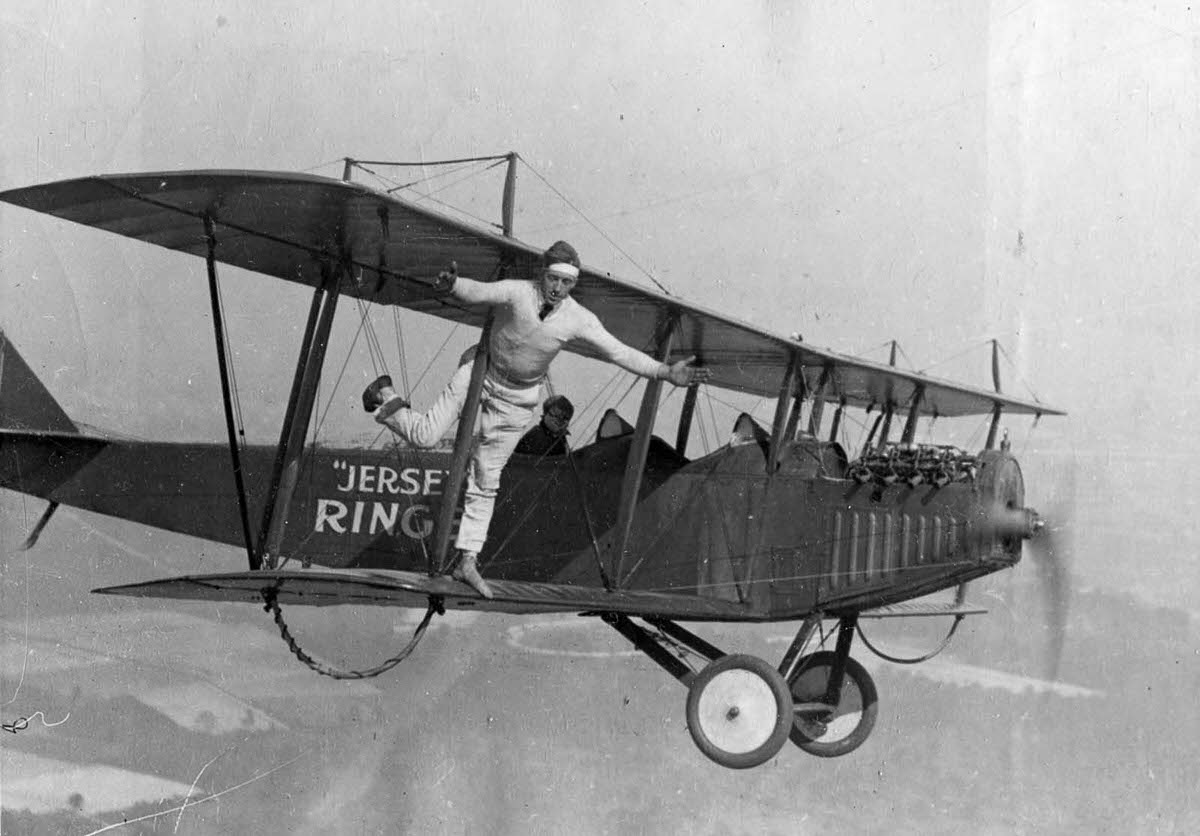
High above New Jersey, a wing walker balances on one leg atop the wing of a Curtiss “Flying Jenny,” arms spread as if testing the very idea of gravity. The open cockpit and spidery web of struts and wires make the aircraft look delicate, yet it carries both pilot and performer through the sky with a steadiness that feels almost unreal. Painted lettering on the fuselage hints at the show-business side of early aviation, when planes were both machines and moving billboards.
In 1920, barnstorming stunts like this helped turn flight from a novelty into a spectacle that drew crowds and fueled public fascination with air travel. Wing walking demanded not just bravado but timing, balance, and trust in the pilot and the aircraft’s structure—skills performed without the safety gear modern audiences might expect. The Flying Jenny’s broad wings and exposed framework offered a precarious stage, and the photograph freezes that split second where risk is made to look effortless.
For historians of early aviation, this scene captures the intersection of sport, entertainment, and technological ambition in the post–World War I era. It’s a vivid reminder that the path to mainstream flight was paved not only by engineers and pilots, but also by daredevils who sold the dream of the skies one stunt at a time. Readers searching for wing walking history, Curtiss Jenny biplane photos, or 1920s aviation in New Jersey will find a story here that still feels breathless a century later.