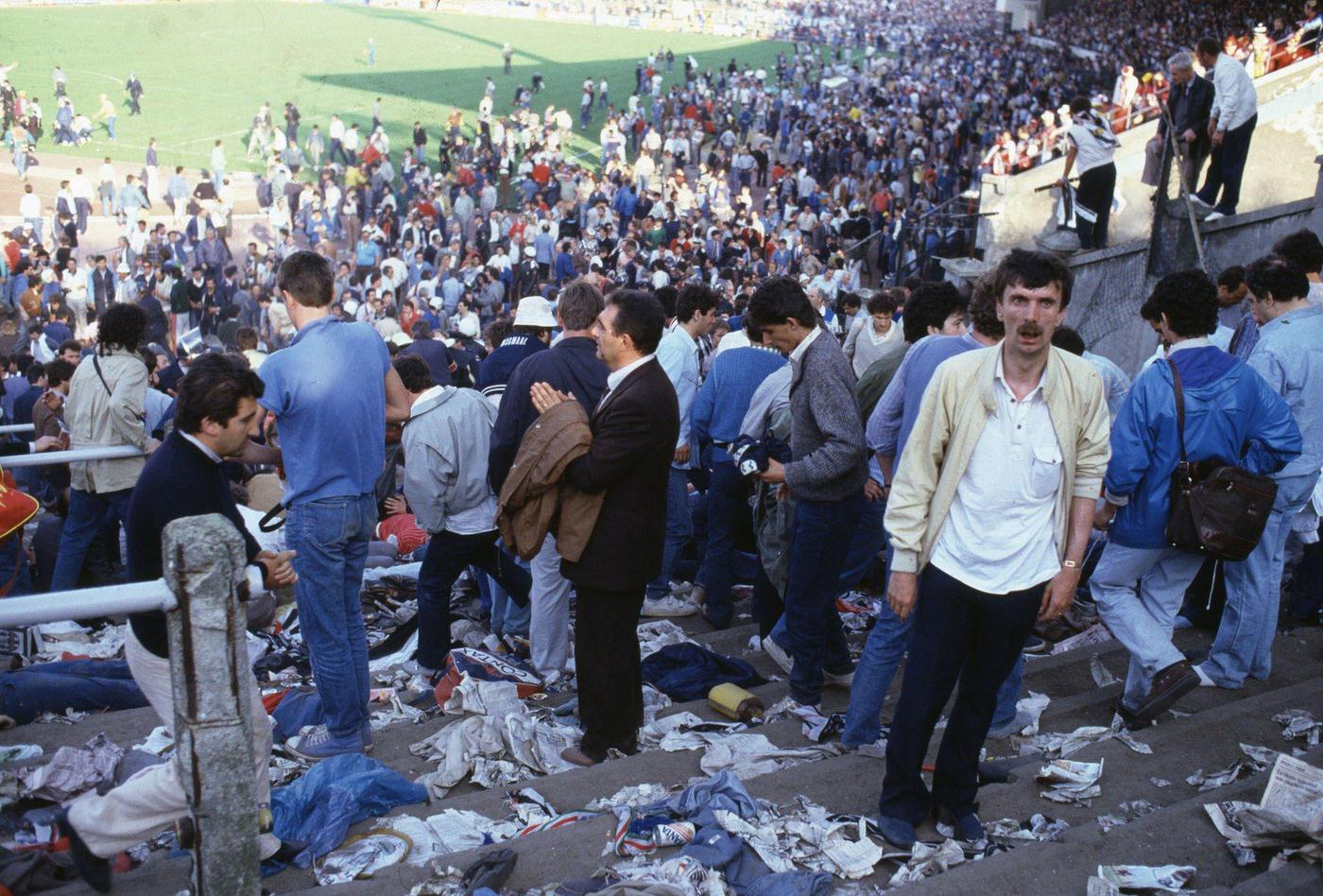
Chaos hangs over the Juventus terrace in this color scene from the 1985 European Cup Final, where a packed stand and a littered, uneven concrete slope turn the matchday setting into something grim and disorienting. In the foreground, a man stares ahead with a hollow, dazed expression, while around him supporters cluster shoulder to shoulder, some looking back up the steps and others pressing toward the pitch. The scattered clothing, newspapers, and debris underfoot underline how quickly order has broken down.
Along the right edge, figures cling to the terrace wall and railings, searching for space and safety as the crowd swells below. The stadium bowl beyond appears busy rather than celebratory—people moving in knots, pointing, waiting, trying to understand what is happening and where to go. Even without captions, the body language tells a story of shock: hands clasped, heads turned, faces fixed in disbelief.
The title anchors the image to the Heysel Stadium disaster, a tragedy that took 39 lives and reshaped European football through sweeping changes in crowd control, stadium safety, and policing. What remains most haunting is the human scale of the moment—an ordinary fan caught in extraordinary circumstances, surrounded by the aftermath of panic in a place meant for sport. For readers searching Juventus, European Cup Final 1985, and Heysel Stadium tragedy, this photograph serves as a stark reminder of why football history cannot be told only in trophies and scorelines.