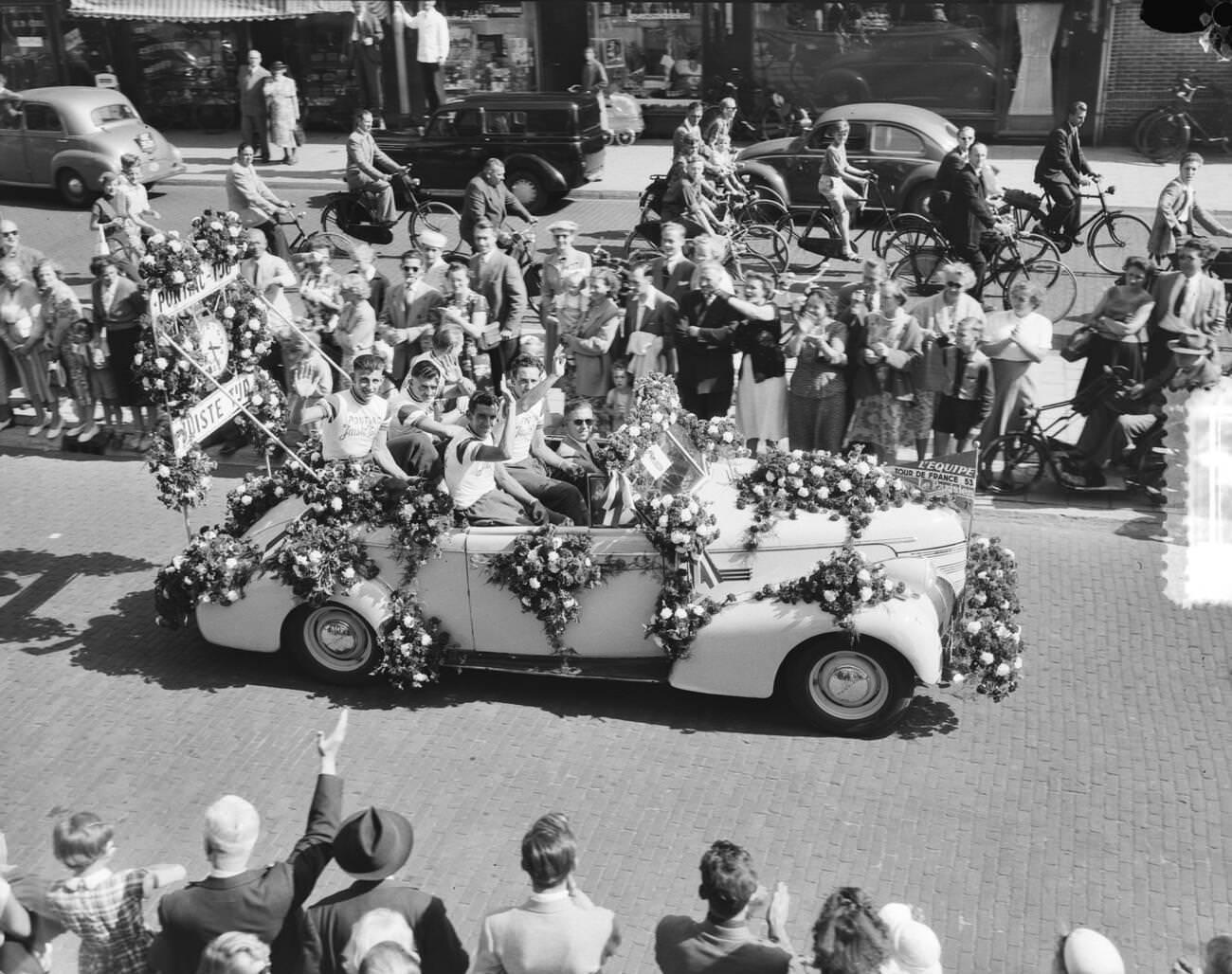
Garlands of flowers spill over a long, open wagon as it rolls through a busy street, carrying cyclists who wave to the crowd like hometown heroes. Spectators lean in from the curb, some dressed in suits and summer hats, while others perch on bicycles to keep pace with the procession. The scene feels less like a hard-edged race moment and more like a celebratory parade wrapped around the Tour de France aura of the 1950s.
In the background, everyday life keeps moving—rounded cars glide past shopfronts, pedestrians pause mid-errand, and a small cluster of riders and onlookers tracks the wagon’s progress. A placard on the vehicle reads “L’EQUIPE TOUR DE FRANCE,” anchoring the photo firmly in cycling history without needing a specific town name. It’s a vivid reminder that the Tour has always been as much about public spectacle and community pride as it is about speed and endurance.
What stands out most is the blend of postwar modernity and old-world pageantry: motor traffic, street commerce, and a flower-laden team vehicle sharing the same frame. The riders’ relaxed posture contrasts with the brutality of mountain stages and long road days, offering a rare glimpse of downtime and recognition. For readers drawn to vintage sports photography, Tour de France memorabilia, or 1950s cycling culture, this image captures the race’s human side—celebrated in the open air, one cheering street at a time.