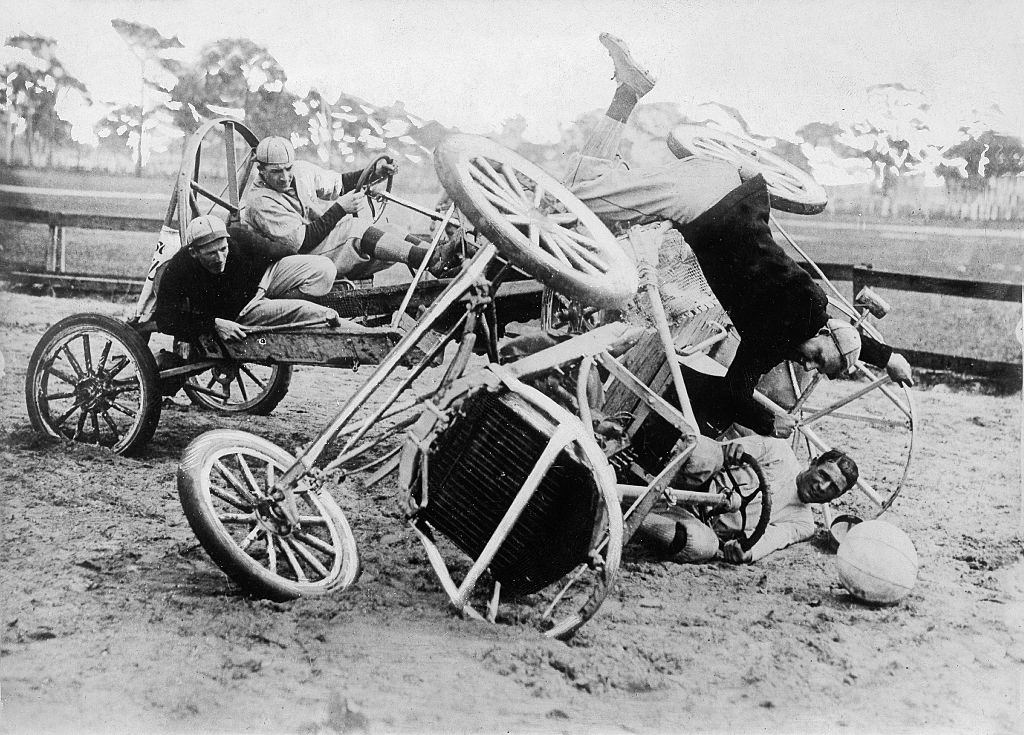
Dust hangs low over the field as two lightweight cars lock together in a violent tangle, one tipped high enough to expose its spoked wheels and bare frame. Helmeted players cling to steering wheels and rails while others spill into the sand, the oversized game ball rolling just beyond the wreck. The scene freezes the split-second chaos that made automobile polo both thrilling entertainment and a magnet for disaster.
Auto polo borrowed the rituals of traditional polo but swapped horses for stripped-down runabouts built for agility rather than safety, turning every charge and sharp turn into a gamble. In this 1928 crash in Fort Myers, Florida, the sport’s improvisational engineering is plain to see—open cockpits, minimal protection, and bodies thrown close to spinning wheels and rigid metal. What reads as spectacle today was once marketed as modern, mechanized daring, a crowd-pleasing test of nerve played at full speed.
Fort Myers sits at the heart of Florida’s 1920s leisure boom, and this photograph fits neatly into the era’s appetite for novelty sports and headline-grabbing stunts. Beyond the immediate drama, the image offers a vivid record of early automotive culture: machines still rough-edged, competition still experimental, and public amusement often flirting with catastrophe. For historians and collectors of vintage sports photography, it’s a striking window into how quickly play could become peril on an auto polo field.