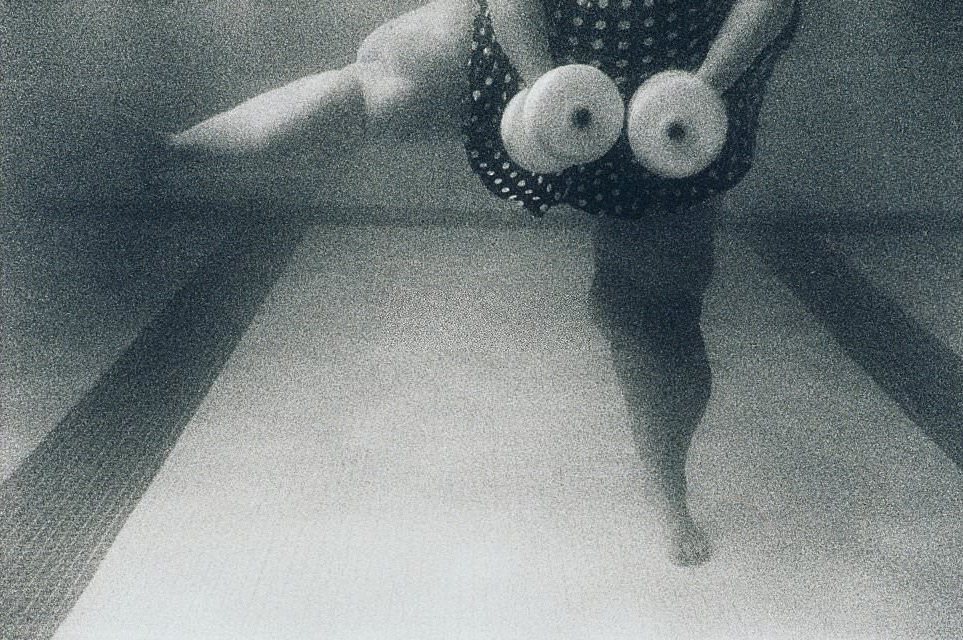
In the quiet, milky water of an indoor pool, a woman practices a form of aquatic exercise that feels both practical and strangely theatrical to modern eyes. One leg extends outward in a controlled lift while her other leg steadies her body, and a polka-dot swimsuit anchors the scene in a bygone era of swimwear. Near her midsection, two round, buoyant-looking devices—resembling foam rings or water dumbbells—hint at the experimental tools once marketed for “figure” training and gentle resistance.
Pool-based workouts have long promised what land-based routines cannot: reduced impact, support for joints, and a way to move more freely against the drag of water. Photos like this sit at the intersection of sports history and early fitness culture, when weight loss advice and physical training were often packaged with novelty equipment and bold claims. Even without a specific date or place, the image evokes an age of structured calisthenics, supervised recreation, and the belief that technology—however simple—could streamline self-improvement.
For readers interested in weird exercise machines and workout methods from the past, this snapshot offers an intimate glimpse into how swimming pools doubled as therapeutic gyms. The composition focuses on motion rather than personality, turning the body into a study of balance, buoyancy, and determination. It’s an arresting reminder that today’s aqua aerobics classes and water-resistance gear have deep roots in earlier decades of inventive, sometimes eccentric, fitness trends.