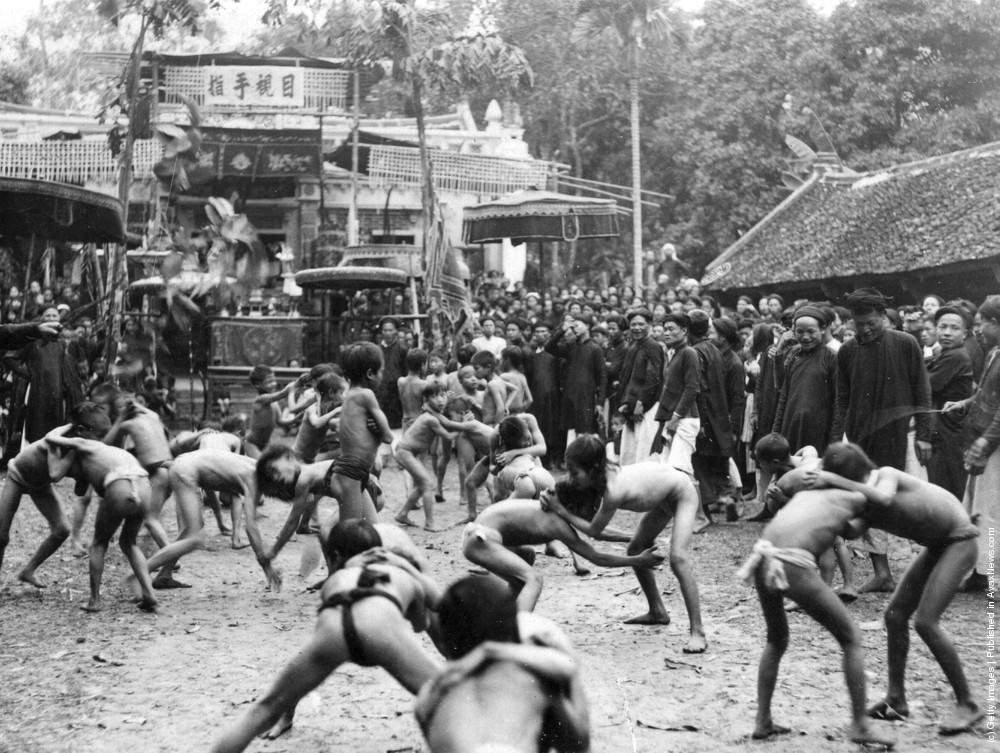
Dust rises from the packed ground as boys square off in pairs, arms locked and feet searching for purchase in a lively children’s wrestling contest in Hadong, Indo-China, during the 1920s. The scene is crowded and kinetic: dozens of young competitors bend low in practiced stances while spectators press in close, forming a human ring around the impromptu arena. Simple waistcloths and bare torsos emphasize the physicality of the sport, and the scattered leaves underfoot hint at an outdoor festival atmosphere.
Behind the wrestlers, a dense line of onlookers—many dressed in dark, traditional garments—watches with a mix of amusement and scrutiny, suggesting the bout was as much communal entertainment as it was competition. Architectural details and signage in the background add texture to the street setting, while awnings and trees frame the gathering like a temporary stage. The photograph balances motion and stillness: children in mid-grapple in the foreground, adults standing shoulder to shoulder in the back, collectively shaping the rules and rhythm of the event.
Rather than a formal stadium sport, this looks like grassroots athletics woven into everyday public life, where training, play, and local pride meet in the open air. For readers interested in the social history of Indochina, the image offers more than “sports”—it provides a vivid window into childhood, community spectacle, and public space in the 1920s. As a historical photo, it invites closer reading of gestures and faces, revealing how physical contests could bind a crowd together long before modern arenas and organized leagues.