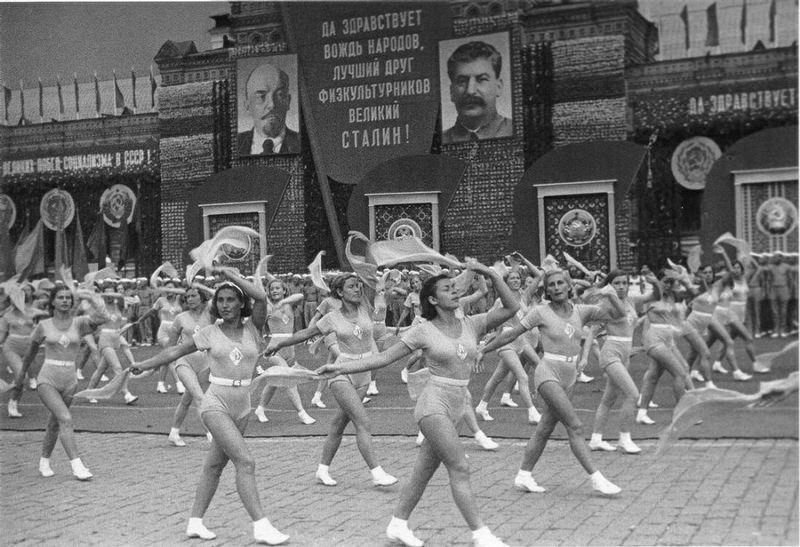
Across a broad paved square, rows of young women move in tight formation, arms lifted in unison as they sweep through a mass gymnastics routine. Matching athletic outfits and light footwear emphasize clean lines and synchronized rhythm, turning individual bodies into a single, carefully rehearsed pattern. The scene radiates the 1930s Soviet ideal of physical culture—strength, discipline, and modernity performed for the crowd.
Behind them rises a temporary façade of banners, emblems, and towering portraits, with bold Cyrillic slogans praising leadership and sport. The contrast is striking: lively motion in the foreground, monumental propaganda in the background, binding fitness to politics in one public spectacle. These vintage Soviet sports photos remind us that athletics in this era often served as civic theater, where endurance and obedience were celebrated together.
For today’s viewer, the appeal lies in the details as much as the message—the confident posture, the crisp spacing between lines, and the collective energy that makes the choreography feel almost architectural. It’s a vivid snapshot of women’s sport in the Soviet Union, when “sports girls” were presented as symbols of a healthier future and a stronger state. Explore this historical image as both a record of athletic culture and a window into the visual language of 1930s Soviet life.