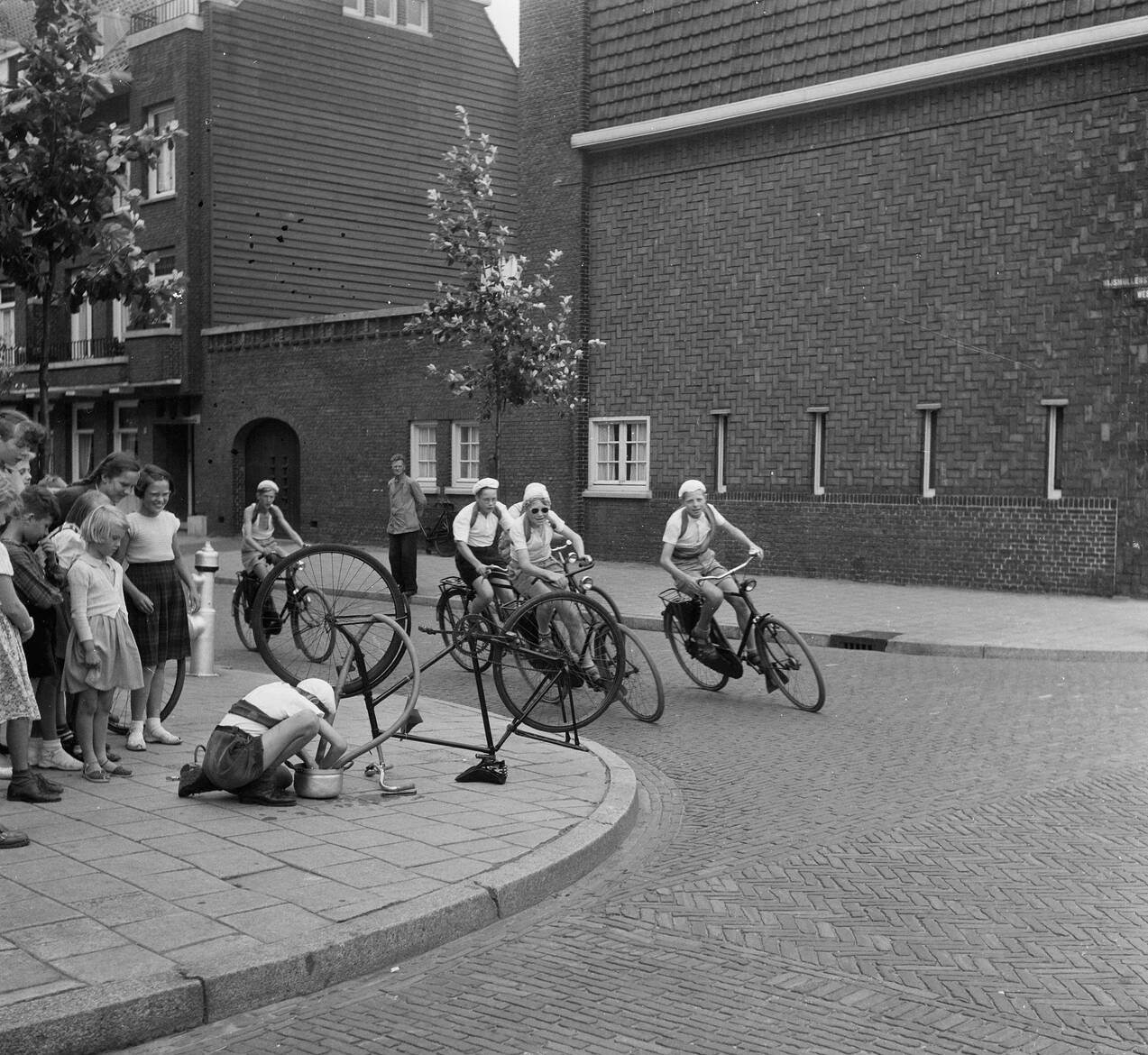
Outside the brick façades of a quiet town street, a small crowd of children gathers at the curb as bicycles sweep around the corner. Caps pulled low and sleeves rolled up, the boys ride with the seriousness of would‑be champions, while a girl and several onlookers watch closely from the pavement. The mix of motion and stillness—wheels blurring on the road, faces intent on the sidewalk—evokes the contagious excitement that followed the Tour de France through communities in 1953.
At the edge of the scene, one youngster crouches beside an upturned bicycle, hands busy at the wheel as if repairing a puncture or tuning a brake in imitation of the pros. A bucket and tools suggest a makeshift pit stop, a child’s version of the race mechanics seen in newspapers and on roadside verges. The everyday details—the cobbled street, the rounded curb, the plain windows and chimneys—anchor this moment in postwar Europe, when cycling was both practical transport and a shared national sport.
Tour de France stages were never only about the riders; they were public holidays on ordinary streets, where children learned the rules of speed, teamwork, and improvisation by playing them out in real time. The photograph’s charm lies in its authenticity: no grandstands, no banners in view, just neighborhood spectators and kids turning a corner into their own peloton. For anyone searching for 1950s cycling history, youth culture, or Tour de France nostalgia, this image offers a vivid glimpse of how the race lived in the imaginations of the next generation.