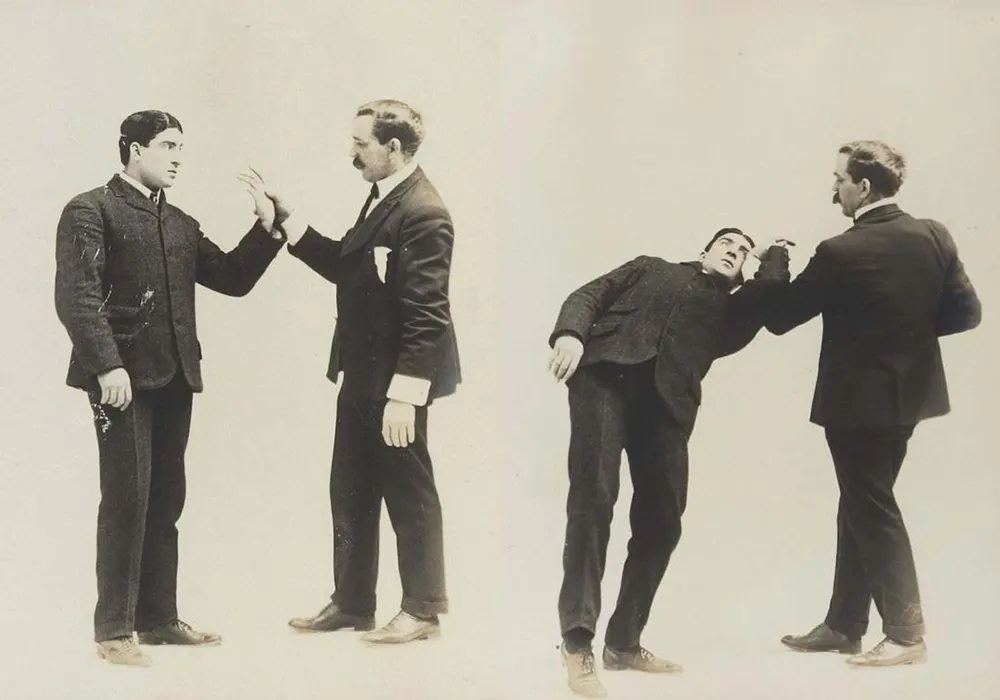
Stiff collars, tailored jackets, and polished shoes set the stage for a surprisingly hands-on lesson in Victorian self-defense. In this 1895-style guide, the men pose like living diagrams, pausing mid-motion so the viewer can study grips, stance, and distance as if reading a manual. The clean, uncluttered background keeps attention on the mechanics of each move—how a wrist is caught, how balance is broken, and how a confrontation is meant to end quickly.
On the left, one pair demonstrates a controlled engagement at arm’s length, palms raised in a moment that suggests parry and capture rather than brute force. To the right, a second sequence shows the payoff: a head control that forces a dramatic lean, turning an opponent’s posture into a vulnerability. The contrast between the composed faces and the decisive body positions hints at a period fascination with “scientific” fighting—orderly, teachable, and framed as respectable sport.
Readers searching for Victorian martial arts, antique self-defense techniques, or early sports instruction will recognize the blend of etiquette and practicality that defined the era’s physical culture. The photo works as both historical evidence and visual storytelling, revealing how instruction was staged before modern training videos—through carefully arranged demonstrations meant to be copied at home or in a club. Seen today, it’s a reminder that personal safety, athletic discipline, and social performance often shared the same well-pressed suit.