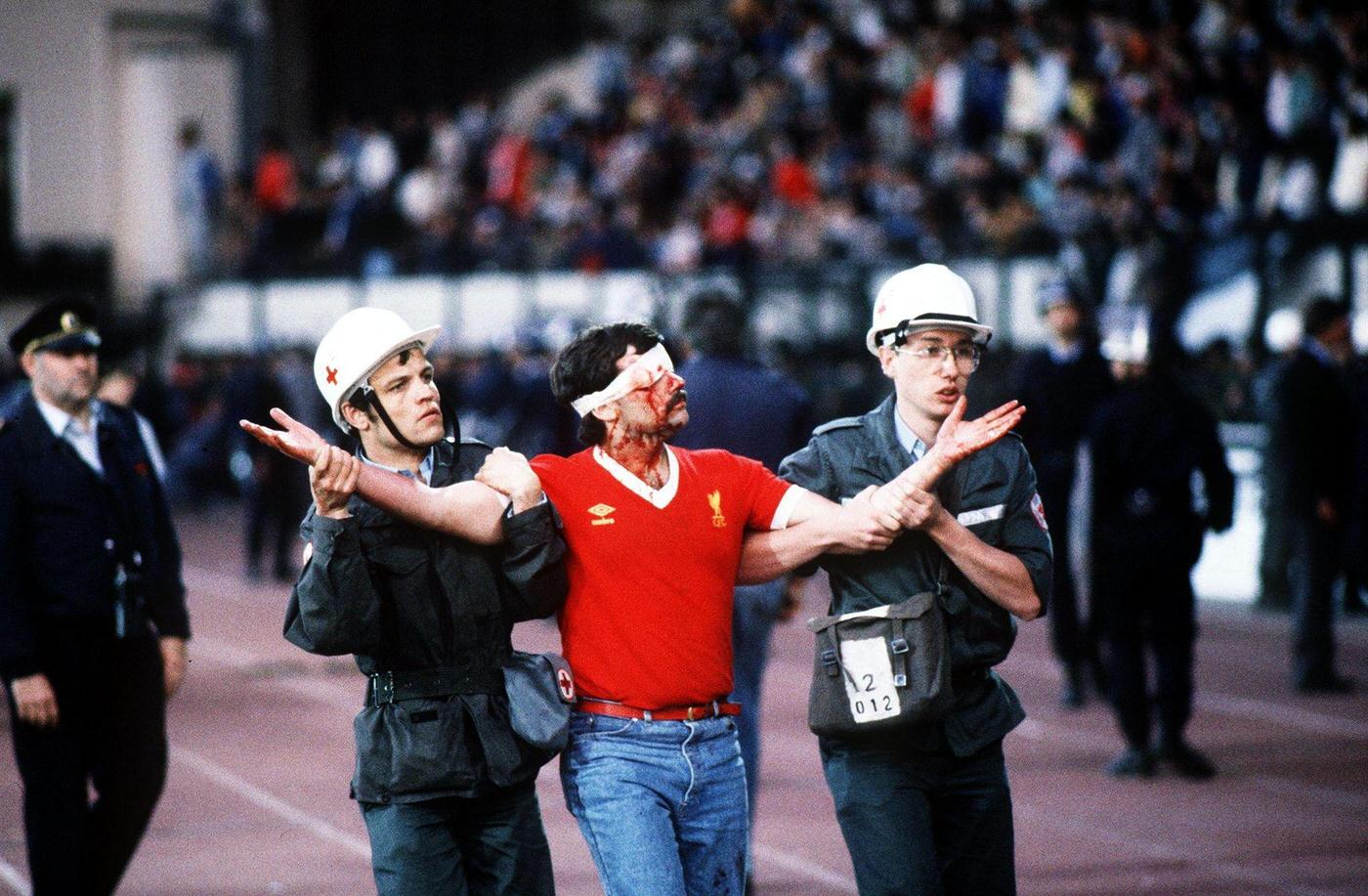
Under the floodlights at Heysel Stadium during the 1985 European Cup Final, an injured Liverpool supporter is guided away by medical staff, his face bandaged and bloodied, arms held out as if still trying to understand what has happened. The red shirt stands out against the grey uniforms and the blurred crowd beyond, turning a private moment of pain into a public record of crisis. Even without hearing the noise of the terraces, the urgency in the escorts’ grip and the fan’s unsteady posture conveys how quickly a football night can become an emergency.
The scene belongs to the wider catastrophe remembered as the Heysel Stadium disaster, a tragedy that left 39 dead and cast a long shadow over European football. Instead of celebrating a showcase match, spectators and authorities were forced into rescue and containment, improvising care amid confusion. Photos like this are vital historical evidence because they place the human cost at the center—one person’s injuries standing in for hundreds of shattered experiences.
For readers searching Heysel Stadium 1985, European Cup Final, Liverpool fan injuries, or the history of football crowd safety, this image anchors the story in stark reality rather than statistics alone. It also hints at the aftermath: grief, accountability, and the push for improved stadium conditions and emergency planning that reshaped how major matches are managed. In a single frame, the era’s atmosphere, the vulnerability of supporters, and the responsibilities of organizers meet in a moment that still demands remembrance.