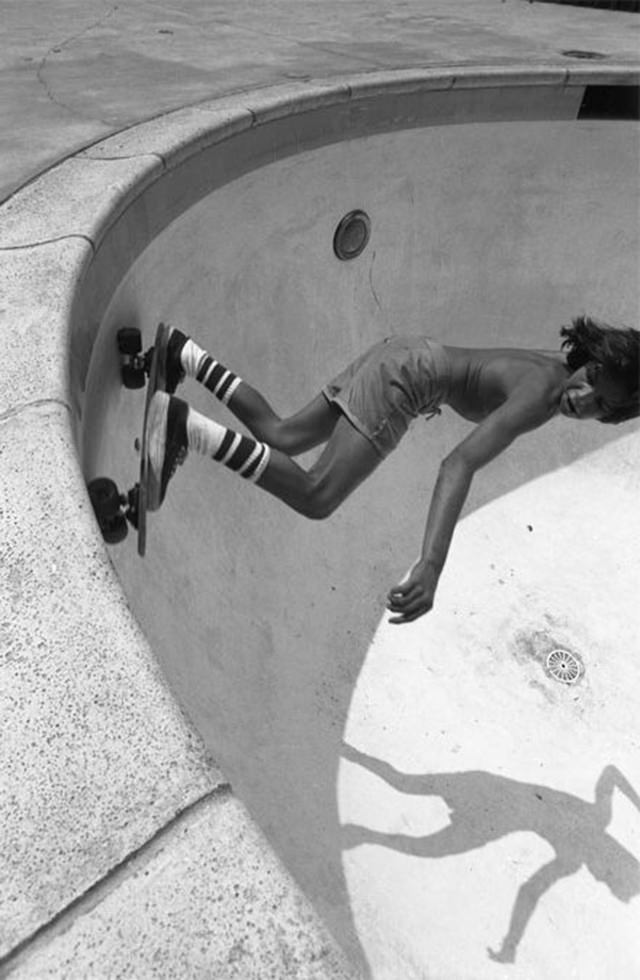
Concrete curves take center stage here, with a skateboarder carving high along the smooth wall of an empty pool. The striped tube socks and short athletic gear instantly evoke 1970s skateboarding style, while the sharp shadow on the basin floor turns the move into a kind of graphic design. You can almost feel the speed in the way the board angles toward the coping and the rider’s body leans into the arc.
Pool riding was one of the era’s most iconic improvised arenas, transforming suburban architecture into a proving ground for balance, nerve, and creativity. The drained bowl’s drain and embedded fixtures hint at its everyday purpose, yet the scene is anything but ordinary—an early snapshot of skate culture learning to read concrete like a wave. That mix of DIY spots and athletic experimentation helped push skateboarding from a pastime into a recognizable sport.
Fans searching for cool vintage photos of 1970s skateboarding sports will find plenty to linger on in the details: the texture of sunlit cement, the minimal gear, and the clean line of a high carve. It’s a reminder that the decade’s influence wasn’t just fashion-deep; it was physical, architectural, and cultural, built around motion and risk in spaces never designed for wheels. This post celebrates that raw, sunbaked moment when skateboarding history was still being written one pool wall at a time.