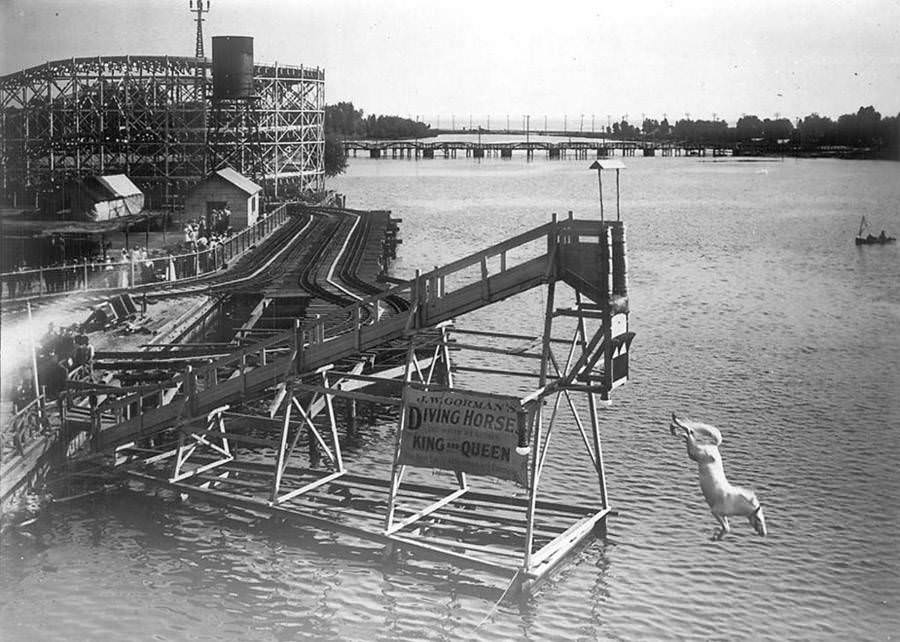
A wooden tower juts out over the water at Hanlan’s Point, and the crowd gathered along the railings isn’t watching a typical ride. Out beyond the platform, a horse is caught midair in the split second between runway and splash, turning the lake into a stage for one of the era’s most jaw-dropping stunts. The amusement park’s latticework structures and tracks fill the left side of the frame, anchoring the scene in the bustling summer playground Toronto knew in 1907.
Look closely and the setup reads like engineered spectacle: steep ramps, narrow walkways, and a sign advertising a “diving horse” attraction. Unlike a carousel or roller coaster, this performance depended on living strength and nerves, blending sport, showmanship, and sheer risk in a way that drew onlookers back again and again. Even at a distance, the open water and long pier in the background underline how exposed the act was—no theater walls, only shoreline, sky, and spectators.
For modern readers searching Toronto history or early amusement parks, the photo is a vivid reminder of how entertainment has changed, and why some once-popular attractions have vanished. The diving horse show at Hanlan’s Point reflects a time when thrill-seeking crowds embraced danger as part of the ticket price, and when animal acts were marketed as family-friendly marvels. Seen today, it invites both fascination and discomfort, capturing the complicated legacy of turn-of-the-century leisure culture on the city’s waterfront.