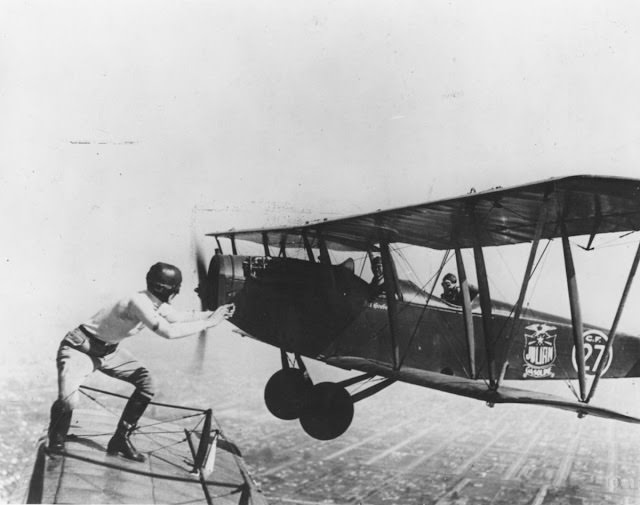
High above a quilt of streets and fields, a wing-walker leans into the wind on a narrow platform while a biplane holds steady just yards away. The aircraft’s open framework, bracing wires, and exposed wheels make the scene feel both delicate and brutally real, a reminder of how little separated performers from open sky. In the cockpit, a pilot peers out, turning a dangerous stunt into a carefully timed handoff.
The title identifies the daredevil as Gladys Ingle, preparing to “change” from Bon MacDougall’s Jenny to Art Goebel’s Jenny in January 1926—an airborne transfer that turned a routine flyover into headline material. “Jenny” refers to the Curtiss JN-4, a workhorse biplane of the era that barnstorming teams adopted for ever more extreme aerial stunts. Moments like this made the Flying Black Cats famous in the 1920s, selling the public on spectacle while demonstrating astonishing coordination between pilots and performers.
What makes the photograph linger is its quiet clarity: no blur of motion, just the poised second before commitment, when grip and balance matter more than bravado. The sparse safety gear and the open-air cockpit underline how early aviation entertainment leaned on nerve, improvisation, and trust in machinery that offered little margin for error. For readers searching for 1920s aviation history, barnstorming stunts, wing walking, or Gladys Ingle’s remarkable career, this image delivers a stark, unforgettable glimpse into the age of aerial showmanship.