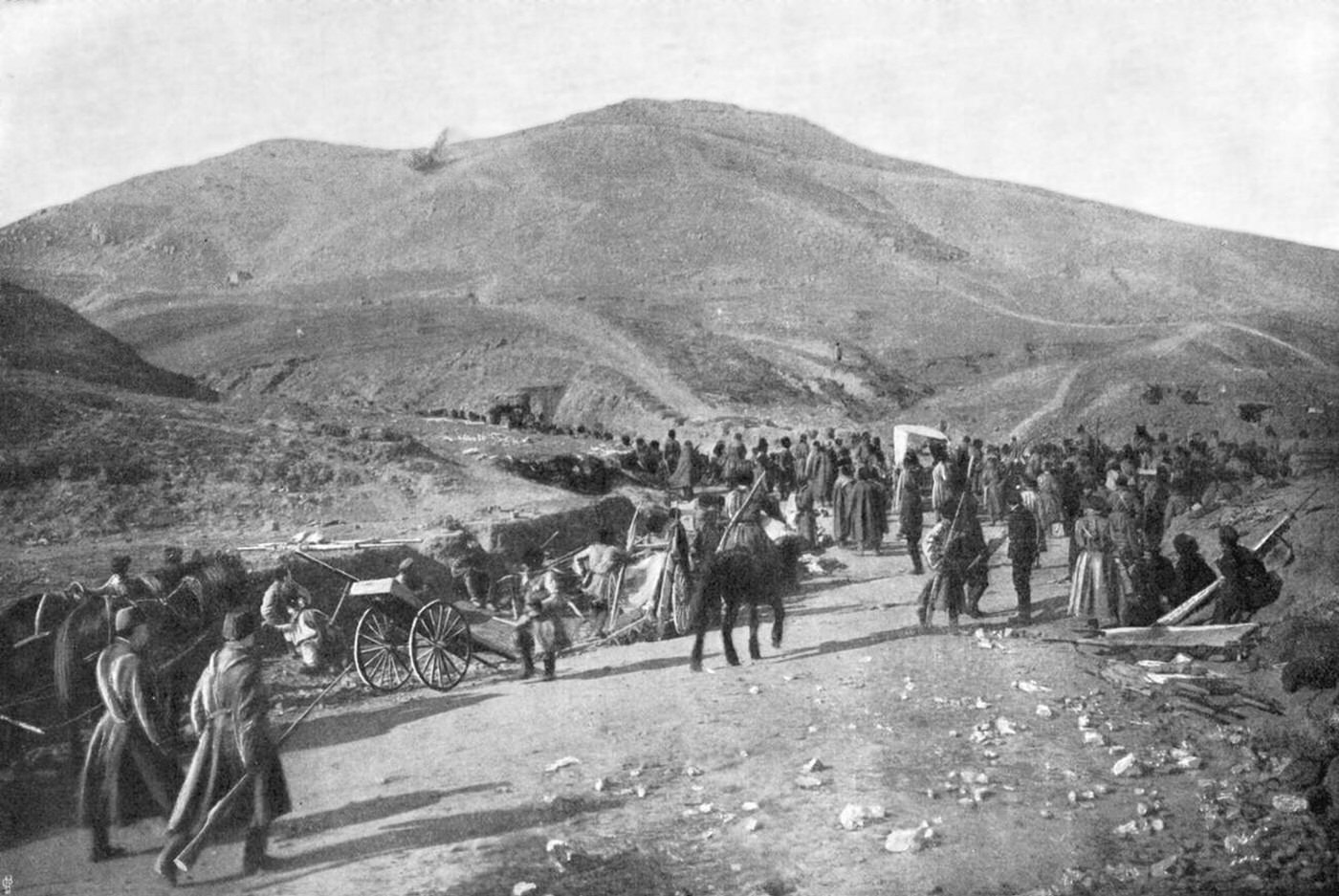
Dust hangs over a barren ridge as a long column of troops and equipment edges forward, the road crowded with figures in heavy coats and caps. At the left, artillery pieces and wheeled carriages sit close to rough earthworks, suggesting hurried emplacement and the constant need to keep guns, ammunition, and men moving together. The wide slope ahead dominates the frame, a stark reminder that in siege warfare the landscape itself becomes an enemy—exposed, scraped raw, and watched from above.
Mention of 6-inch guns in the title points to the weight of the task: hauling and positioning large-caliber artillery for the defense of 203 Metre Hill in August 1904. Nothing here looks ceremonial; the scene reads as work under pressure, with soldiers clustering around the roadside and along trenches, while a few stand apart as if awaiting orders. Even without visible muzzle flashes, the photograph conveys the rhythm of preparation—digging, dragging, aligning, and waiting for the next bombardment.
For readers exploring Wars & Military history, this image offers a grounded view of logistics and fortification rather than battlefield drama. It highlights how early twentieth-century combat depended on manpower and animal power to place heavy guns where they could dominate approaches and support infantry positions. As a historical photo of artillery deployment and defensive positions around 203 Metre Hill, it invites a closer look at the human scale behind big strategy: the crowded road, the raw hillside, and the tense stillness before action.