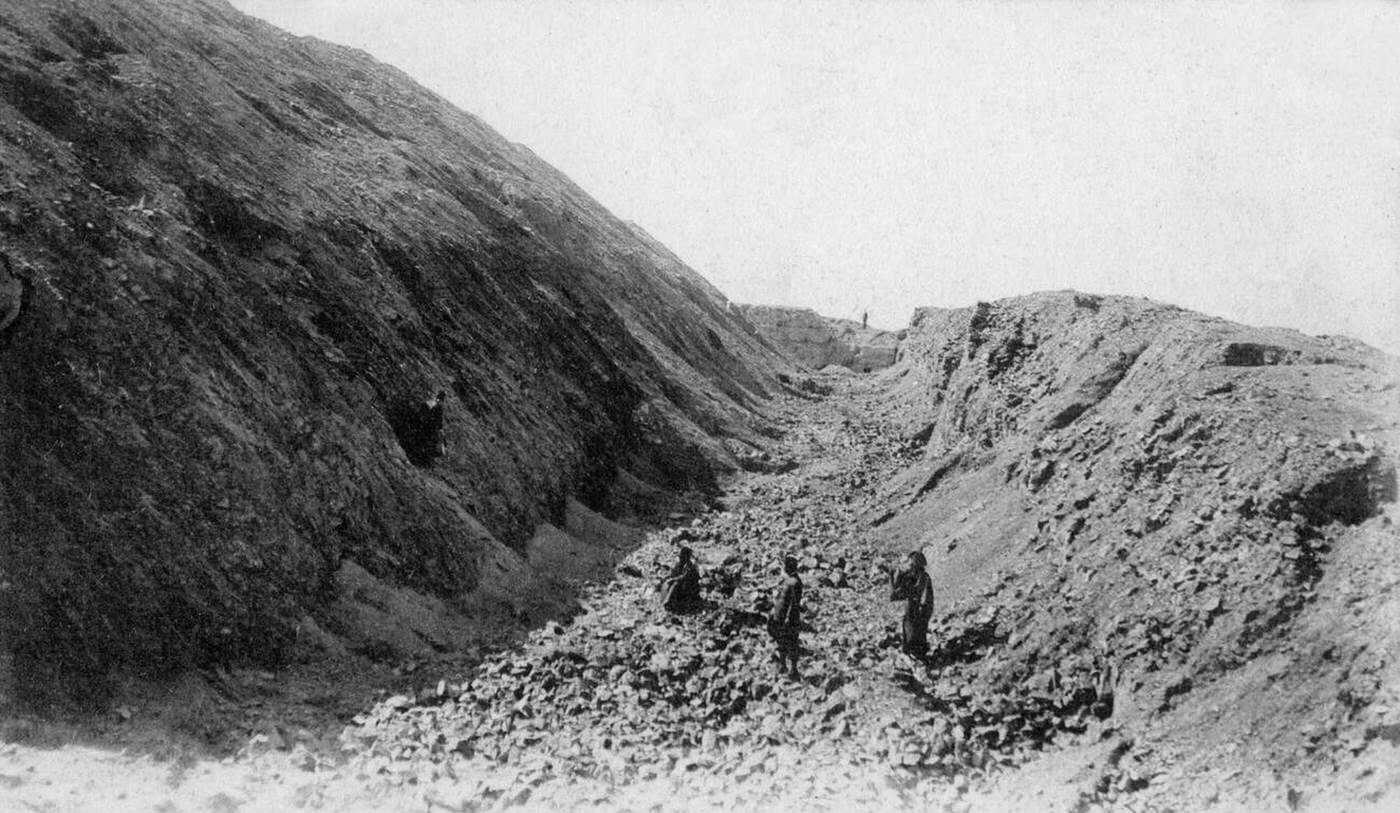
Cut into the earth like an open wound, a long trench or ravine runs between steep banks of bare soil and scattered rock, dwarfing the few soldiers who stand within it. The stark, treeless landscape feels exposed and unforgiving, emphasizing how quickly the terrain itself became a weapon in the Russo-Japanese War of the 1900s. Even without visible gunfire, the scene carries the weight of waiting—men positioned low, using depth and distance for cover.
Attention gravitates to the scale of excavation: rough slopes, uneven spoil piles, and a channel that draws the eye toward a hazy horizon. Such groundworks speak to the era’s grinding siege tactics and the growing importance of entrenchment, field fortifications, and engineering under fire. The figures, small against the embankments, suggest how soldiers navigated these improvised corridors to move, observe, and survive.
For readers exploring wars and military history, this photograph offers a quiet but powerful glimpse into the daily reality of early 20th-century combat. The Russo-Japanese War is often remembered for its decisive clashes and modern weaponry, yet images like this underline the human scale of endurance in the dirt—where strategy became geography. It’s a compelling artifact for anyone searching for authentic Russo-Japanese War photos, trench warfare scenes, and the lived texture of the 1900s battlefield.