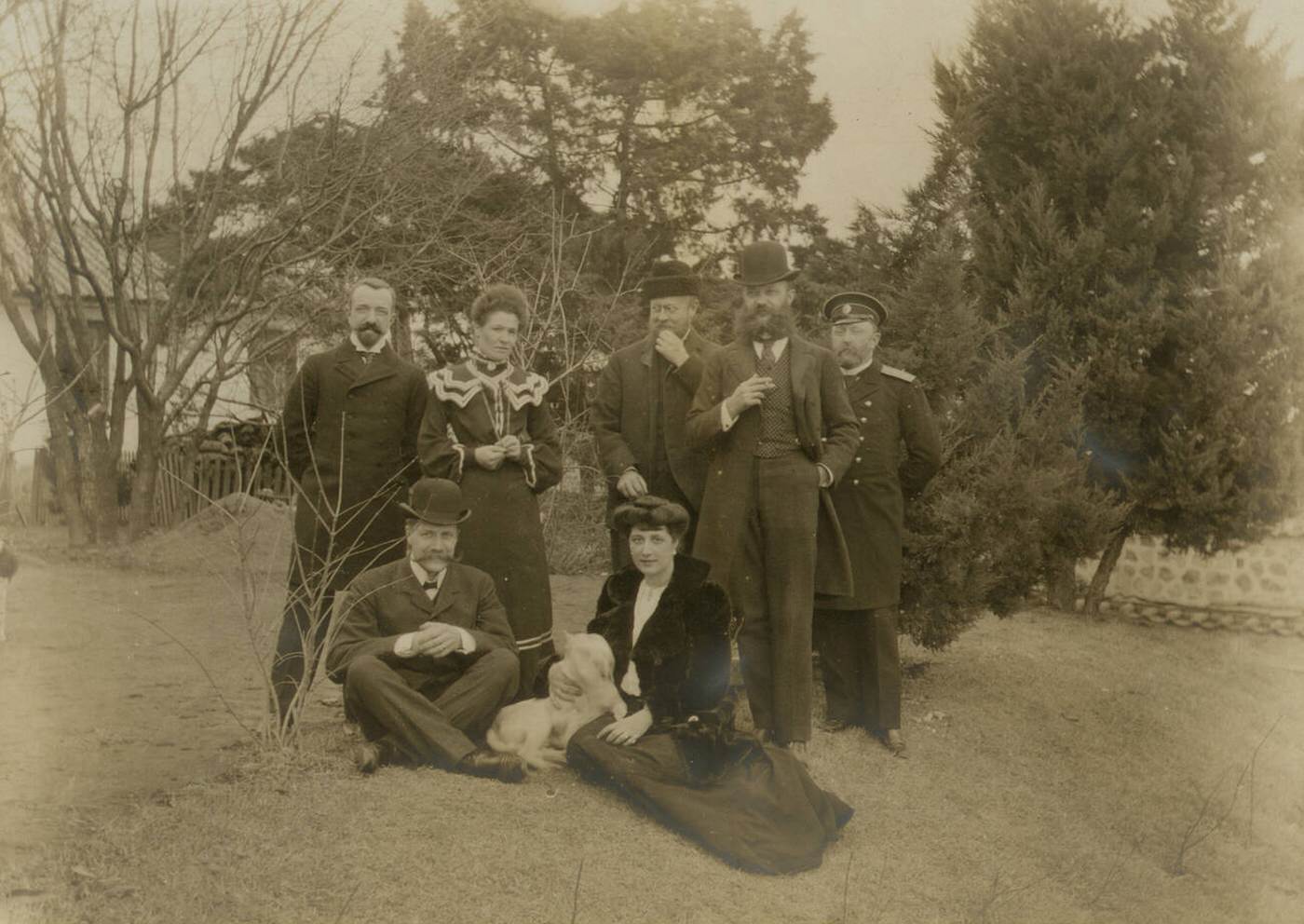
A small gathering posed outdoors—two women in formal dress, several men in dark coats and hats, and a uniformed officer—offers a quiet counterpoint to the violence implied by the Russo-Japanese War of 1904–1905. The setting feels domestic rather than martial, with bare branches, evergreens, and a low wall framing the group as if this were an interlude stolen from the anxieties of a far-reaching conflict. Even the presence of a dog at the front softens the scene, reminding viewers that wars are experienced not only at the front but also in homes, gardens, and ordinary pauses in time.
Clothing and posture speak the language of the early twentieth century: stiff collars, tailored overcoats, and the deliberate stillness demanded by period photography. The officer’s cap and tunic hint at the military systems that underpinned imperial ambition, while the civilians’ careful presentation suggests social order and stability—an ideal often tested by the pressures of mobilization, propaganda, and uncertainty. In a war fought over influence and territory, images like this help tell the larger story of how empires touched everyday lives far from the battlefield.
Within a photo-driven look at the Russo-Japanese War, such portraits deepen the narrative beyond ships, trenches, and headlines. They invite readers to consider the people who watched events unfold, carried news across borders, or lived in the shadow of decisions made by distant governments. As part of a Wars & Military collection, this moment of calm becomes historically valuable: a reminder that the conflict of empires was also a conflict of routines, relationships, and the fragile normalcy preserved for the camera.