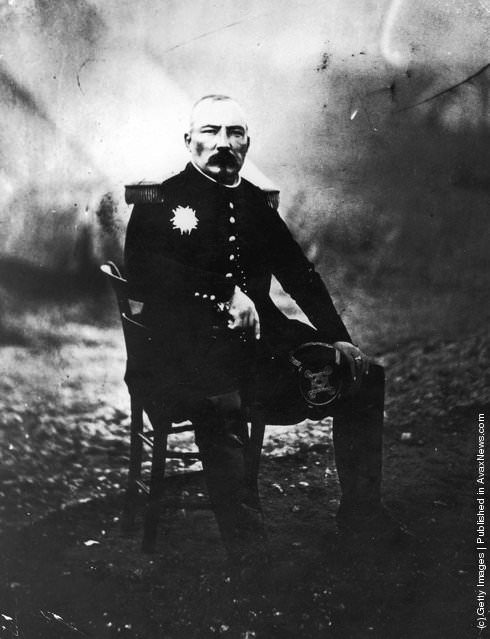
General Pierre Bosquet sits posed in formal uniform, his posture steady and his expression guarded, as if weighing decisions that can’t be photographed. The crisp line of buttons and the bright star of decoration on his chest draw the eye, while his hand rests near a plumed hat placed close at his side—small signals of rank and ritual amid the larger chaos of war. Even the hazy studio backdrop feels like smoke, a visual echo of the battlefields that made officers like Bosquet famous and feared.
Linked by its title to the Charge of the Light Brigade at Balaklava, the portrait invites readers to think beyond heroics and into the uneasy space between admiration and tragedy. Bosquet’s oft-quoted French remark, “C’est magnifique, mais ce n’est pas la guerre,” has endured because it captures a paradox at the heart of the Crimean War: courage on display, yet tactics and communication breaking down with deadly consequences. In that tension—between spectacle and strategy—this image becomes more than a likeness; it becomes a doorway into military history, leadership, and the rhetoric that shapes how battles are remembered.
For anyone exploring 19th-century warfare, the Crimean conflict, or the mythology surrounding Balaklava, this historical photo offers a compelling anchor. It speaks to how commanders were presented to the public, how uniforms and medals conveyed authority, and how a single line of commentary could outlive the moment it described. Readers searching for the Light Brigade, Bosquet, or Crimean War photography will find here a stark reminder that legend often begins with a face made still, long after the guns have fallen silent.