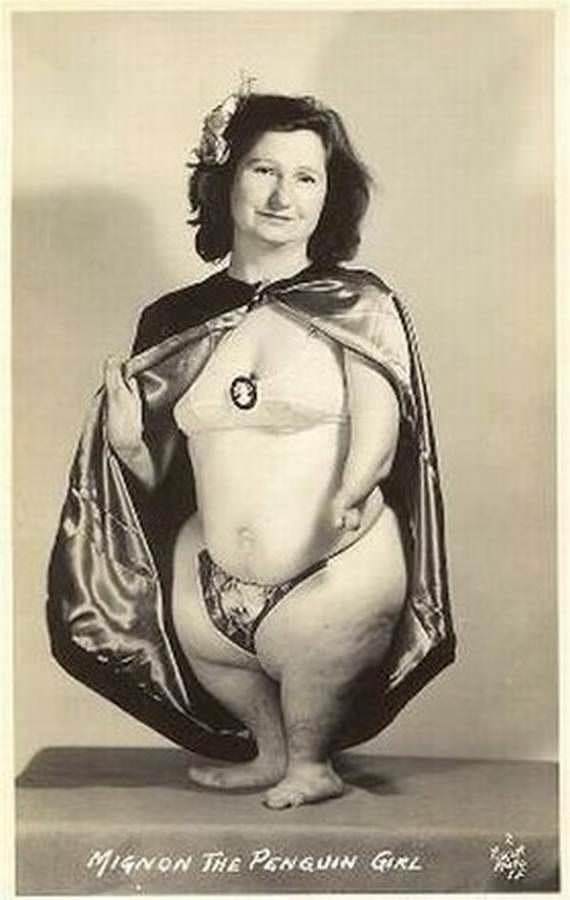
A confident studio portrait introduces Ruth Berry in the show-business persona that made her a widely advertised attraction from roughly the 1930s through the mid-1960s. Posed against a plain backdrop, she meets the camera with a calm, practiced expression while a glossy cape frames her body like stage curtains. The minimalist setting keeps attention on performance and presence rather than place, a common strategy in promotional photography meant for posters, lobby displays, and souvenir cards.
The bottom caption reads “Mignon the Penguin Girl,” a phrase that hints at the era’s fascination with novelty acts and carefully branded stage identities. Her costume—partly theatrical, partly intimate—suggests the blend of spectacle and pin-up marketing that traveled with carnivals, sideshows, and touring revues, where a single striking image could sell a ticket. Details like the draped satin, the deliberate stance, and the soft lighting point to a photograph created to be reproduced and circulated, not merely kept as a private memento.
Behind the pose lies a broader story about entertainment history and the complicated way performers were packaged for public consumption in the twentieth century. For readers searching “Ruth Berry” or “Mignon the Penguin Girl,” this image offers a vivid starting point for exploring how publicity portraits shaped reputations and sustained long careers on the road. It’s a reminder that even a spare studio photograph can carry the fingerprints of an entire era—its aesthetics, its marketing, and its appetite for the unusual.