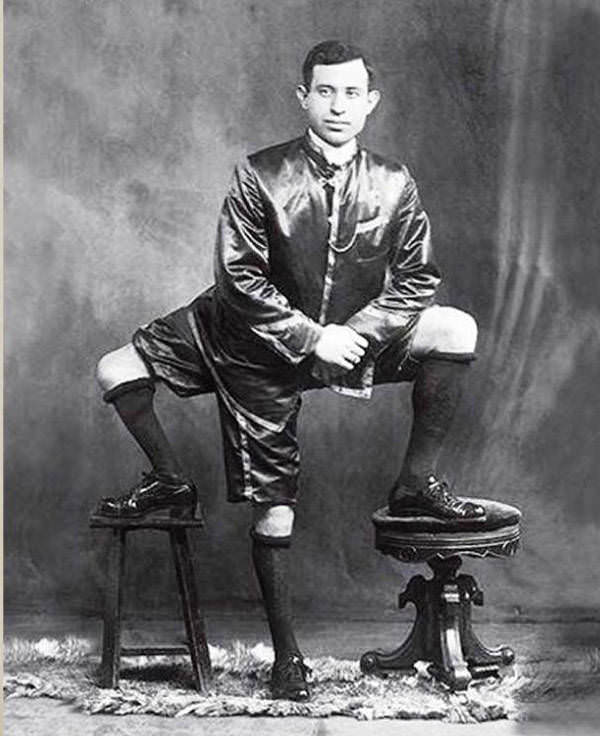
Frank Lentini stands in a studio pose that feels both theatrical and matter-of-fact, dressed in a glossy suit and high socks, his gaze steady as he balances one foot on a small table and another on a stool. The composition leaves no doubt about what viewers were meant to notice in 1914: a third leg, the visible result of being born with a parasitic twin. Even in a staged setting, the portrait reads as an assertion of presence rather than a plea for pity.
Early 20th-century audiences often encountered unusual bodies through publicity photos like this one, sold as curiosities and circulated widely in posters, postcards, and newspaper blurbs. The controlled backdrop, the props, and the deliberate stance turn anatomy into a headline, yet they also show a man shaping how he would be seen. For anyone researching sideshow history, medical oddities, or disability representation, the image offers a stark example of how spectacle and self-presentation could collide.
Seen today, the photograph invites a more careful reading than the old label of “weird” ever allowed. It’s a rare historical glimpse into the lived reality behind a sensational story—how a performer with a parasitic twin navigated public attention, fashion, and posture to command the frame. If you’re exploring Frank Lentini, the third leg, or the broader history of circus and freak show culture, this 1914 portrait is a compelling starting point for that conversation.