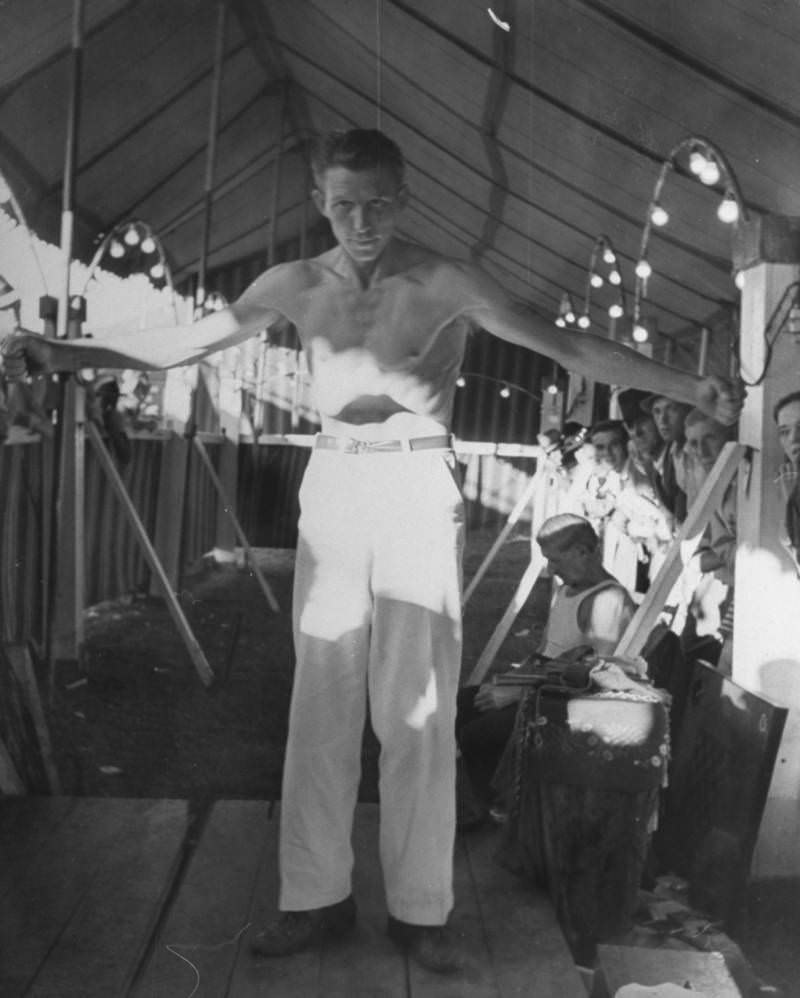
Under the canvas roof of a fairground sideshow, Silas Whaley stands center stage with his arms outstretched, turning his own body into the attraction. The title’s claim—“the man without a stomach”—comes alive in the stark way his abdomen appears drawn inward, an unsettling illusion made more dramatic by the harsh, angled light cutting across his torso. Wooden planks underfoot and rows of small bulbs overhead place the scene firmly in the working theater of a traveling carnival, where spectacle depended as much on staging as on the performer.
On the right edge of the frame, onlookers crowd in close, their faces half-lit as they watch for the next breath or movement that proves what they think they’re seeing. A seated figure near a small table hints at the everyday mechanics of the show—tickets, patter, and the controlled rhythm of “step right up” entertainment—while Whaley’s steady gaze suggests practiced command of the room. Even without hearing the barker’s spiel, the photograph conveys that peculiar mix of curiosity and disbelief that fueled the sideshow economy.
As a historical photo from the Greenbrier Valley Fair in 1938, this moment offers more than “weirdness”: it’s a window into American fair culture, bodily performance, and the blurred line between skill, illusion, and promotional exaggeration. Sideshow acts like this thrived on bold titles and intimate viewing spaces, inviting audiences to test the boundaries of what the human body could do—or appear to do. For readers interested in carnival history, vintage fairground life, and the spectacle of the 1930s, Whaley’s performance remains a striking reminder of how entertainment, commerce, and curiosity once met under a tent.