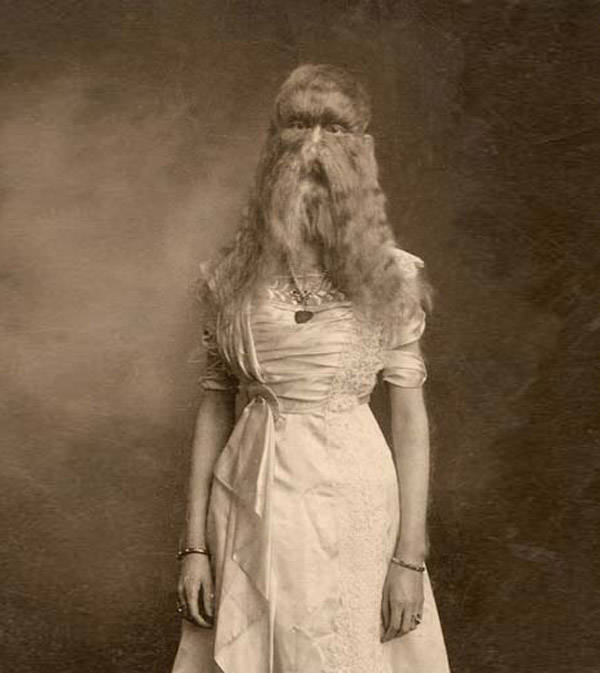
Soft studio lighting and a plain backdrop frame Alice Doherty in a formal, turn-of-the-century portrait, her long dress and jewelry arranged with the same care given to any respectable sitter. The detail that arrests the eye is the thick growth of hair across her face and upper body—an unmistakable sign of hypertrichosis, the rare condition that would later be sensationalized as “werewolf syndrome.” Even in a staged photograph meant for public consumption, her stillness reads as composed rather than theatrical, a reminder that behind the spectacle stood a real child growing into adulthood.
Born into an era when medicine had limited answers and public curiosity was easily monetized, Doherty became known on the show circuit as the “Wooly Girl,” a name designed to turn a condition into a brand. The title’s note that she was placed in a freak show at just two years old points to the harsh economics and family pressures that shaped many lives in the sideshow world. Photographs like this functioned as both advertisement and proof, circulating as souvenirs that blurred the line between documentation and exploitation.
Looking back at this 1902 image today invites more than shock; it asks for context about disability, consent, and entertainment in early popular culture. It also serves as a valuable artifact for readers searching the history of hypertrichosis, sideshows, and the lived realities behind “freak show” publicity. The portrait’s careful styling—proper attire, posed hands, and a composed stance—quietly pushes against the era’s sensational language, insisting on Doherty’s humanity even as the industry tried to sell her difference.