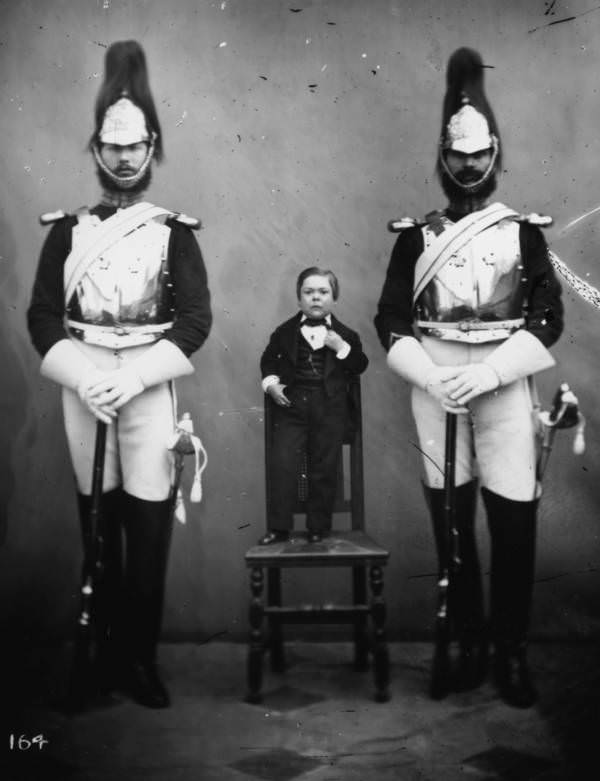
Framed like a deliberate stage tableau, George Sherwood Stratton—celebrated as “General Tom Thumb”—stands atop a simple wooden chair, placed precisely between two imposing guards in full dress uniform. The guards’ tall plumed helmets, crossed straps, and rigid posture create a visual arch around the small figure at center, turning scale and symmetry into the main story. Even the plain studio backdrop feels intentional, stripping away distractions so the eye moves straight to contrast: polished military grandeur flanking a compact performer dressed formally, with hand poised as if mid-introduction.
So much of the 1860 fascination with celebrity, spectacle, and “curiosities” is condensed into this single portrait. Stratton’s nickname borrows the language of rank and authority, while the soldiers’ presence reinforces a theatrical sense of importance—part honor guard, part living prop. The chair is not merely furniture here; it’s a pedestal, a practical solution that also heightens the sense of presentation, as if the studio itself has become a miniature proscenium.
Looking closely, the photograph reads like an advertisement as much as a keepsake, built to be remembered and shared. The balanced composition, the careful costuming, and the performers’ steady gazes work together to produce an image that is instantly legible: a famous figure set against symbols of power and discipline. For readers searching early celebrity photography, Victorian-era entertainment history, or General Tom Thumb images, this portrait offers a striking example of how nineteenth-century studios manufactured awe through contrast, costume, and control of the frame.