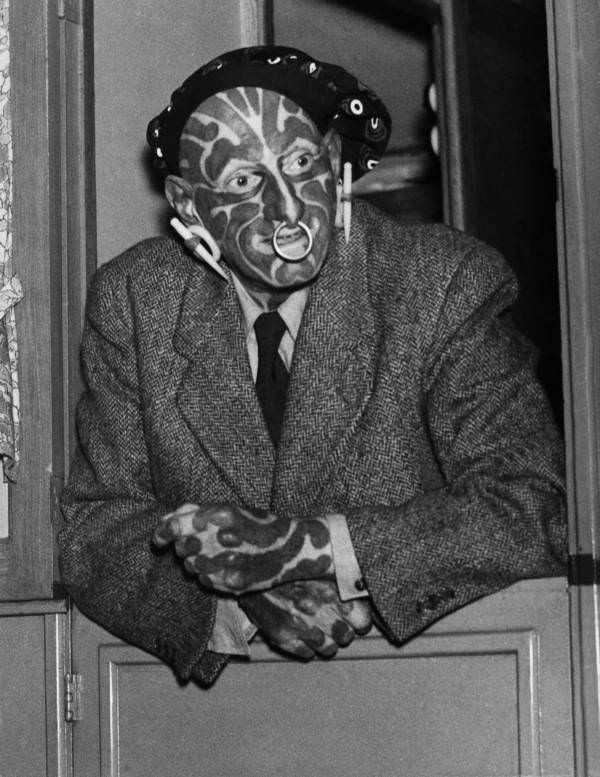
Leaning from a doorway in a heavy tweed coat and tie, Horace Ridler looks every bit the mid‑century gentleman—until the eye meets the bold, zebra-like tattooing that covers his face, hands, and neck. A large ring sits through his nose, and distinctive ear adornments frame a gaze that feels both composed and carefully presented. The contrast between formal clothing and extreme body modification turns the portrait into a study of deliberate transformation.
Known on the sideshow circuit as “The Great Omi” or “The Zebra Man,” Ridler crafted a persona that played to audiences hungry for the unusual in the years surrounding 1946. The patterned tattoos aren’t a casual flourish; they read as a complete design, meant to be seen from across a tent or stage. Even in a quiet indoor setting, the performance lingers—poised posture, turned head, and the sense that the camera is another paying customer.
Sideshow history often swings between fascination and discomfort, and Ridler’s image sits right in that tension, inviting questions about agency, spectacle, and the economics of novelty entertainment. For readers exploring vintage circus and carnival culture, this photograph offers a rare, close view of how identity could be constructed as a living exhibit. As a piece of body art history and a window into the era’s popular amusements, it remains striking long after the crowds have gone.