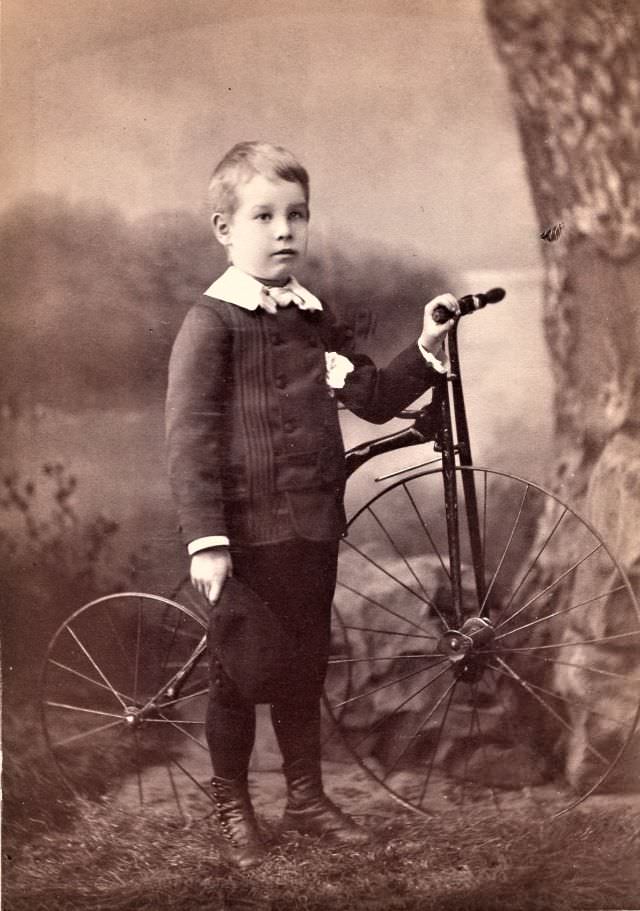
A small boy stands solemnly beside a high-wheeled bicycle, his posture carefully composed as if the studio session demanded the same discipline as a schoolroom. He is dressed in a dark, tailored outfit that reads as unmistakably Victorian: a fitted jacket with vertical detailing, a crisp white collar, and a neat necktie that draws the eye to his face. The softly painted backdrop and the deliberate, formal pose hint at the period’s love of propriety and presentation, even in children’s portraits.
Clothing like this reflects how Victorian-era fashion for little boys often echoed adult menswear, just scaled down and softened with youthful touches. The structured jacket suggests respectability, while the short trousers paired with dark stockings signal a stage of childhood before full-length pants became standard. Lace-trimmed cuffs and the bright collar add contrast and a sense of careful grooming, details that were meant to communicate good upbringing as much as personal style.
Alongside the outfit, the bicycle functions as more than a prop: it points to modernity, leisure, and the growing visibility of consumer goods in everyday life. For historians of fashion and culture, images like this help track how boys’ clothing balanced practicality with the era’s ideals—clean lines, modest decoration, and a miniature version of masculine formality. The result is a vivid snapshot of Victorian childhood, where dress, manners, and material aspirations were woven together in a single portrait.