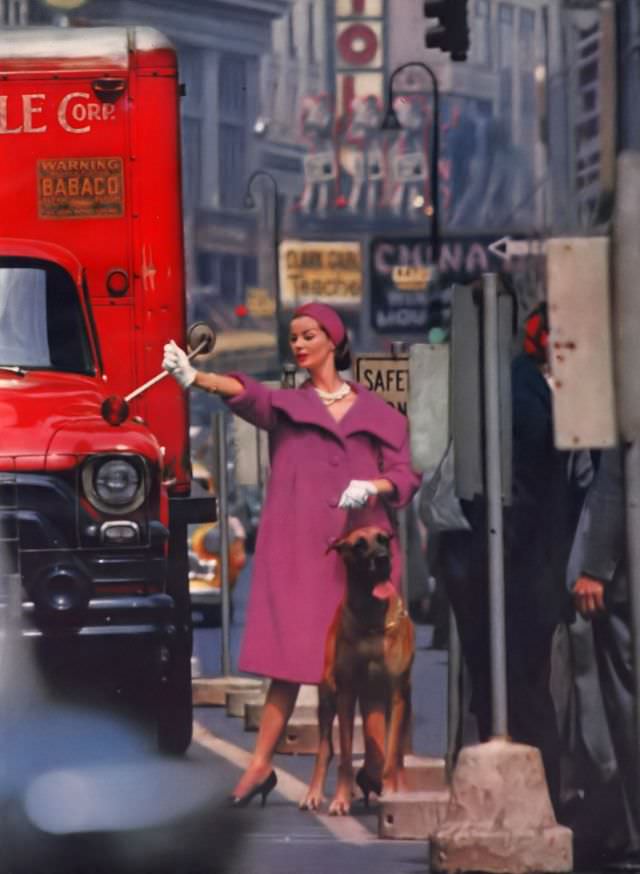
Dolores Hawkins stands at the curb in a saturated cyclamen wool tweed coat by Tiffeau-Busch, turning an everyday city moment into pure Vogue theater. The coat’s fluffed texture and sweeping collar read as both practical and extravagant, balanced by a close-fitting hat, crisp white gloves, and sleek heels. Her raised arm—part hail, part gesture—creates the kind of poised motion that fashion photography of the 1950s loved: elegant, controlled, and meant to be noticed.
Behind her, the street presses in with commercial signage, traffic signals, and the blunt presence of a bright red truck, grounding the styling in real urban grit rather than a studio fantasy. The contrast between industrial street life and polished couture makes the color pop even more, with cyclamen acting as a visual beacon amid gray sidewalks and layered city haze. Even the dog at her side contributes to the narrative, emphasizing companionship and confidence as she holds her place in the flow of the sidewalk.
Published in Vogue in July 1958, the scene speaks to a mid-century ideal of modern femininity—self-possessed, impeccably dressed, and fully at home in public space. It’s a fashion editorial image that doubles as cultural document, hinting at how magazines sold not only garments but also a way of moving through the world. For collectors of 1950s fashion photography and Vogue history, Hawkins’ street-side stance remains a memorable snapshot of couture meeting the city.