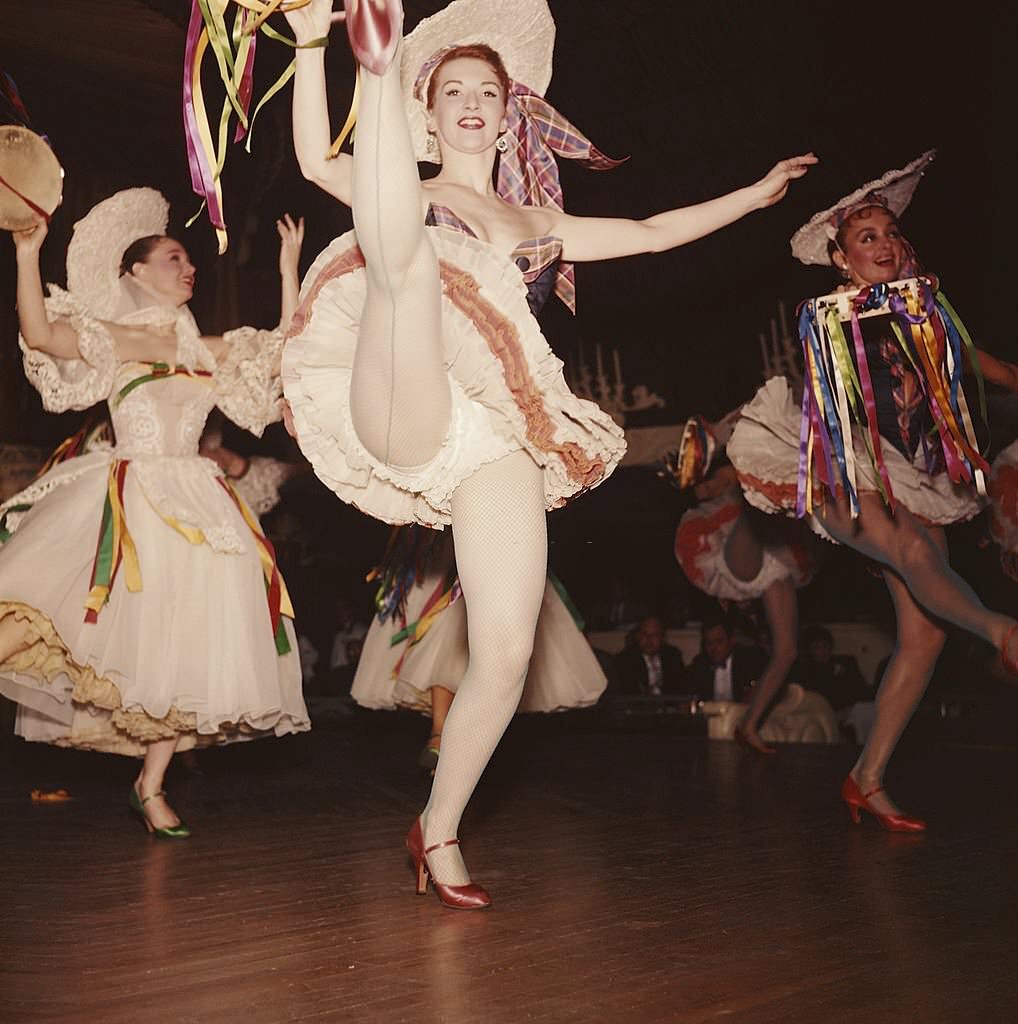
Mid-kick, a cancan dancer lifts her leg in a near-vertical arc, ribbons fluttering above a whirl of ruffled skirts. The stage lighting catches the pale sheen of tights and the crisp layers of lace, while her bright smile holds steady in a pose that looks effortless only from a distance. Around her, other performers blur into motion, their arms raised and hems swinging, turning the frame into a snapshot of speed, balance, and practiced bravado.
Behind the spectacle sits the dance’s long-running appeal: a mix of high energy, playful provocation, and precision ensemble work. The cancan’s famous kicks demand strong cores, flexible hips, and fearless timing, especially when executed in heeled shoes and heavy costume pieces that must still read as light and buoyant. Even without a visible marquee or identifiable venue, the scene evokes the nightclub and cabaret tradition where coordinated chaos, cheeky flourishes, and infectious rhythm were as important as the choreography itself.
Details of fashion and culture crowd every corner—the frilled dresses, the jaunty hats, and the rainbow streamers that punctuate the movement like celebratory punctuation marks. “A Kick Coming” feels less like a posed portrait than a split-second warning of what the audience is about to get: a line of dancers driving the tempo with legs, laughter, and daring. For anyone searching the history of the cancan dance through vintage performance photography, the image offers a vivid reminder that entertainment was built not just on glamour, but on athletic grit.