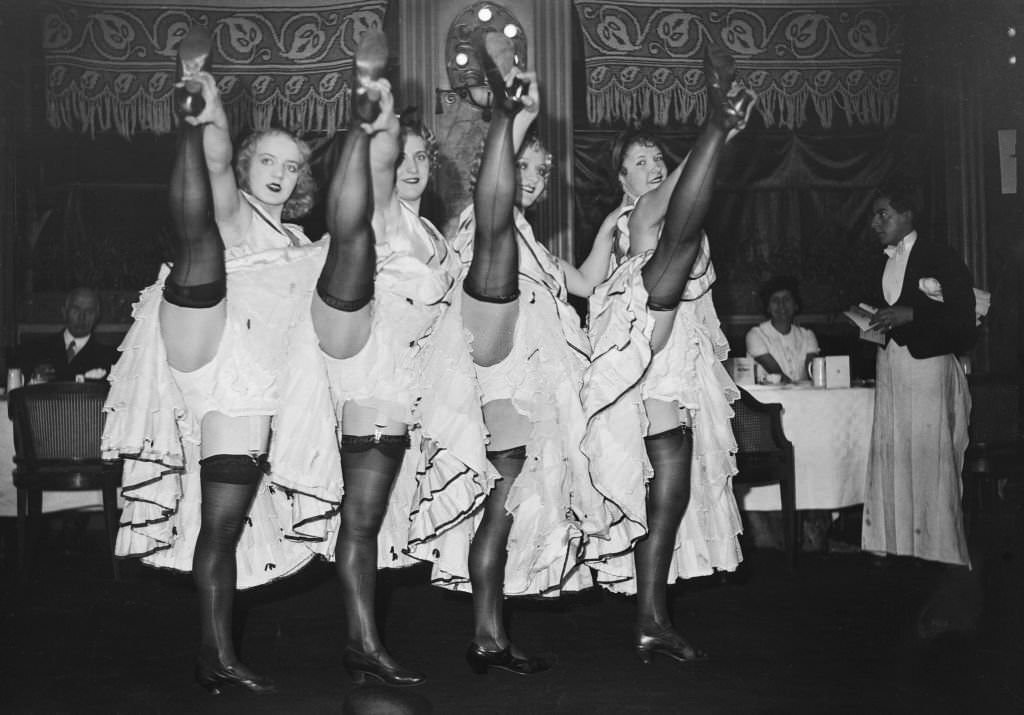
Four cancan dancers hold a perfectly timed high kick, their ruffled skirts flying up to reveal dark stockings and garters, a hallmark of Parisian nightlife spectacle. Their expressions mix concentration and showmanship as they keep formation shoulder to shoulder, heels pointed and toes lifted toward the ceiling. The tight crop of the stage area emphasizes the athletic precision of the routine, turning a restaurant floor into a theater.
Behind the performers, the dining room at Henry’s restaurant reads as unmistakably 1930s: white tablecloths, seated patrons, and a waiter in formal service attire pausing with an order pad in hand. Decorative wall panels and soft lighting frame the scene, suggesting a venue designed to feel both glamorous and intimate. The contrast between the stillness of the audience and the blur of motion in the dancers’ skirts underscores how cabaret entertainment electrified an evening out.
Paris in 1935 offered visitors and locals a cultural shorthand for modern pleasure—music, fashion, and the enduring mythology of the cancan. The dance’s reputation for high energy and physical demands comes through in the height of each kick and the coordinated line, a choreographed dare delivered with a smile. For anyone searching French cancan history, cabaret culture, or 1930s Paris restaurants, this photograph captures the era’s blend of elegance, audacity, and disciplined performance.