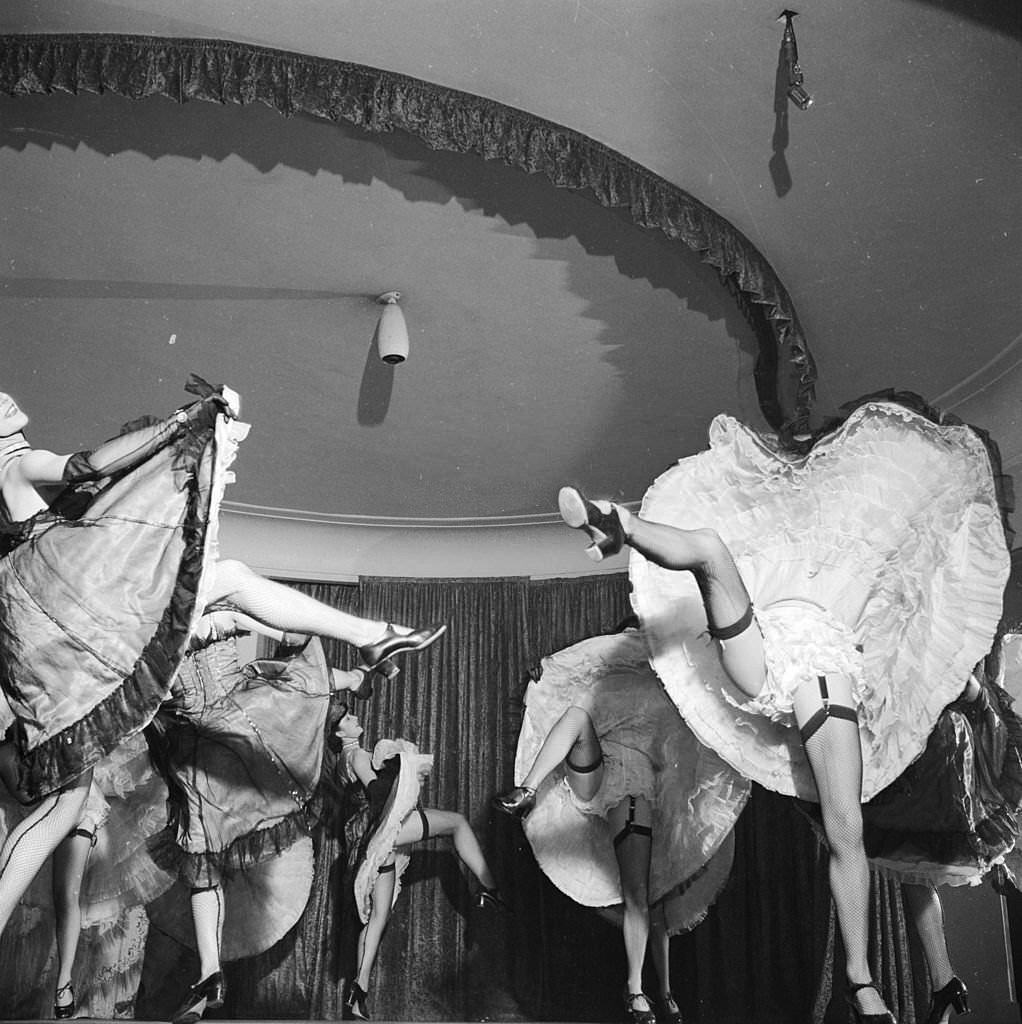
Skirts fly like billowing sails as a line of cabaret dancers drives into a CanCan sequence, legs snapping upward in crisp, athletic kicks. The stage at London’s Pigalle nightclub in Piccadilly feels packed with movement—fishnet stockings, heeled shoes, and layered petticoats forming bright arcs against the darker backdrop. Caught mid-routine, the performers’ poses create a lively zigzag across the frame, turning choreography into a moment of pure visual rhythm.
Under the low ceiling and simple stage lighting, the club’s interior reads as intimate rather than grand, with curtains and curved architectural details framing the show. That closeness heightens the sense of impact: each kick, each lifted hemline, and each swirl of fabric seems aimed straight into the room. The photo emphasizes the physical demands behind the glamour, suggesting balance, strength, and timing as essential as costume and spectacle.
Pigalle’s 1950s nightlife reputation rests on this mix of showmanship and daring, where Paris-inspired cabaret traditions were adapted for postwar London audiences. The CanCan—part dance, part display—offered a spirited escape, blending flirtation with disciplined ensemble performance. As a piece of mid-century fashion and culture history, the image preserves the energy of Piccadilly after dark and the enduring allure of the nightclub stage.