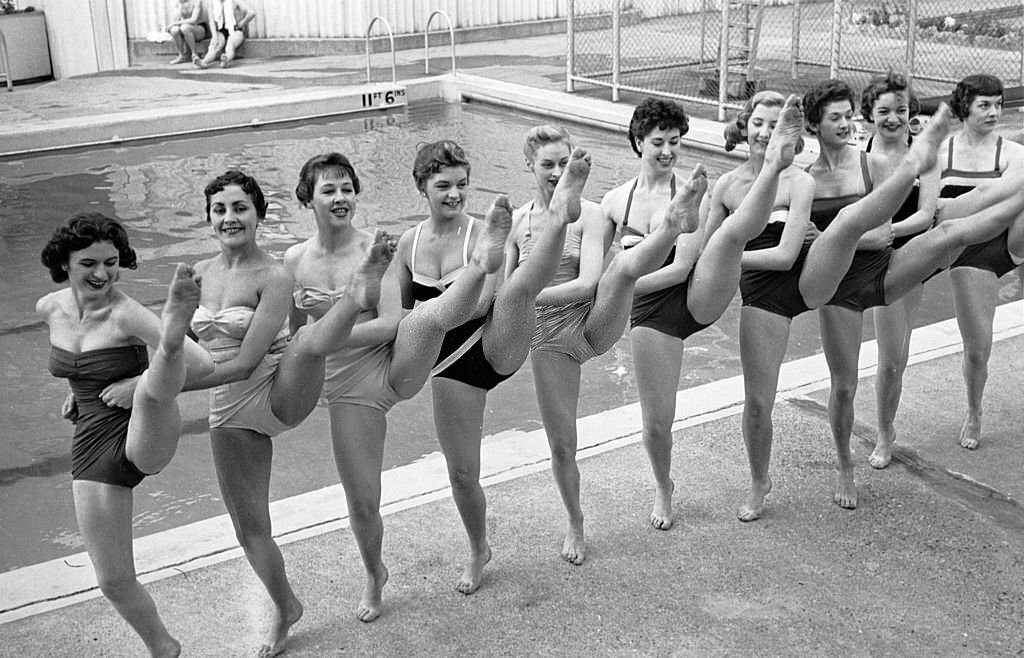
Along the edge of the Oasis pool in Holborn, a chorus line of young performers lifts into a crisp Can-Can kick, knees high and toes pointed in near-perfect unison. Their matching swimsuits and neatly styled hair read as unmistakably mid-century, while the dancers’ relaxed smiles suggest a rehearsal atmosphere rather than a formal stage show. Behind them, the pool’s still water and utilitarian railings frame the scene with the everyday geometry of a London leisure venue.
The Can-Can’s famous energy is written into the pose: each raised leg demands balance, timing, and stamina, turning a playful flourish into disciplined athletic work. Captured outdoors, the routine feels lighter and more modern than the smoky music-hall settings often associated with the dance, hinting at how popular entertainment adapted for television and public spectacle. Even without an audience visible, the line formation and synchronized motion evoke the precision expected of professional dance troupes.
In 1953, acts like the TV Toppers sat at the crossroads of postwar culture—part variety tradition, part broadcast-era freshness—bringing spectacle into new spaces and new living rooms. The rehearsal-by-the-pool juxtaposition is striking: glamour and grit, showmanship and practice, all set against the practical backdrop of a public pool in central London. For anyone exploring Can-Can history, 1950s fashion, or British entertainment culture, the photograph offers a lively snapshot of performance in transition.