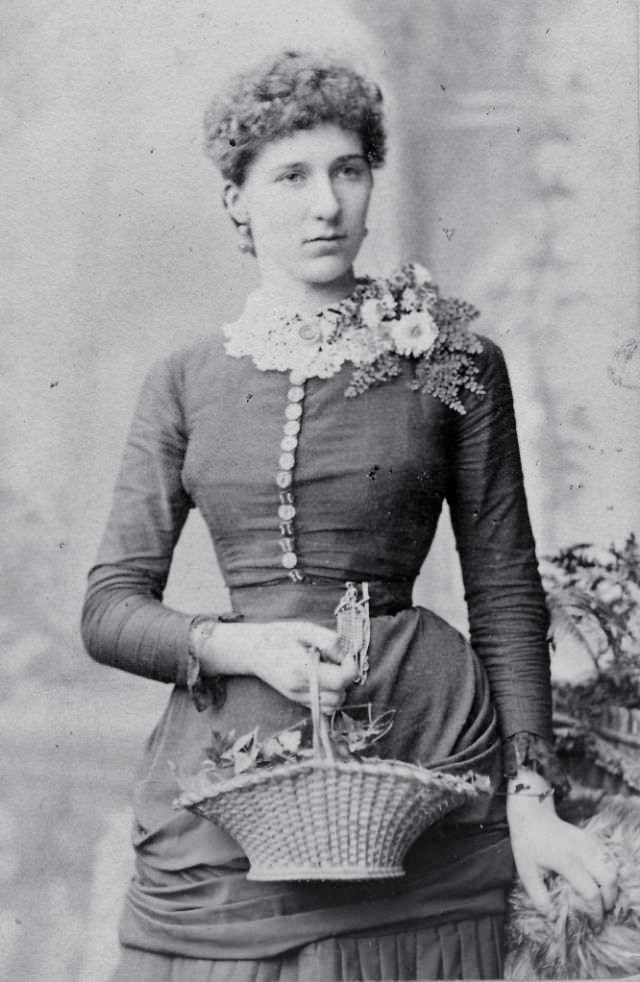
Poised against a softly painted studio backdrop, a Victorian woman meets the camera with a calm, self-possessed gaze. Her high lace collar and floral trim frame the face like a halo of craftsmanship, while the row of buttons down the bodice draws the eye to a tightly defined waist—an outward sign of the corset beneath. In her hands she holds a woven basket of greenery, a prop that adds domestic charm to the formal portrait.
The silhouette tells the larger story of late 19th-century fashion: structured layers engineered to produce a smooth, upright line from shoulders to hips. Long fitted sleeves, carefully arranged skirt drapery, and the controlled shape of the torso reflect how essential corsetry was as an undergarment, shaping not only dresses but also posture and presence. Details such as earrings, cuff accents, and the crisp neckline suggest a world where respectability and style were stitched into every seam.
Beyond aesthetics, images like this offer a window into Victorian-era culture, when ideals of femininity, status, and self-presentation converged in clothing. The tight corset—admired, debated, and often uncomfortable—became both a tool of fashionable beauty and a symbol of social expectations. Seen today, the portrait reads as a quiet document of textile skill and lived experience, preserving how women navigated elegance and constraint in the late nineteenth century.