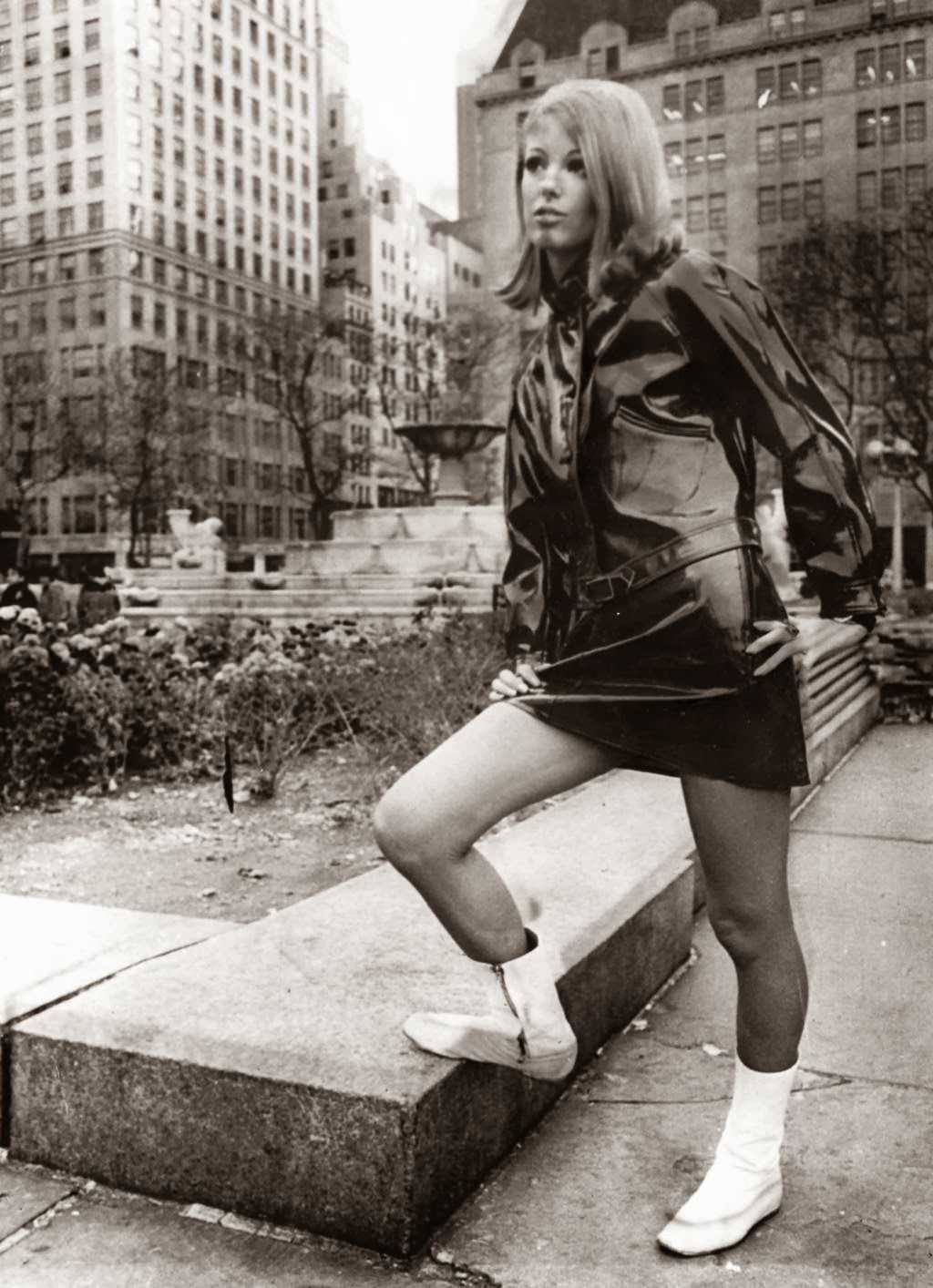
City towers and a plaza fountain set the stage for a striking 1960s fashion moment, as model Lorna McDonaugh poses in British designer Paul Blanche’s “Raingear.” The glossy, weather-ready look—paired with a flared hipster miniskirt and an Ike jacket—turns an everyday urban corner into a runway, with her white boots adding a crisp, modern edge against the stone and pavement.
A playful promise sits behind the UPI caption: outfits like this could make rainy days popular. In the mid-1960s, practical outerwear was being reinvented with high-shine materials and youthful silhouettes, and the miniskirt’s bold hemline made even utilitarian clothing feel daring. The confident stance, the sleek finish of the fabric, and the clean geometry of the surrounding architecture all reinforce a decade obsessed with newness and forward motion.
Fashion historians often point to images like this as proof that style revolutions didn’t stay confined to studios or catwalks—they lived on sidewalks, in plazas, and in the public eye. For readers exploring 1960s women’s fashion, mod street style, and the cultural rise of the miniskirt, this press photo preserves a snapshot of how media, design, and city life collaborated to sell an attitude as much as a garment. It’s a reminder that the era’s most memorable looks were built for visibility, whatever the weather.