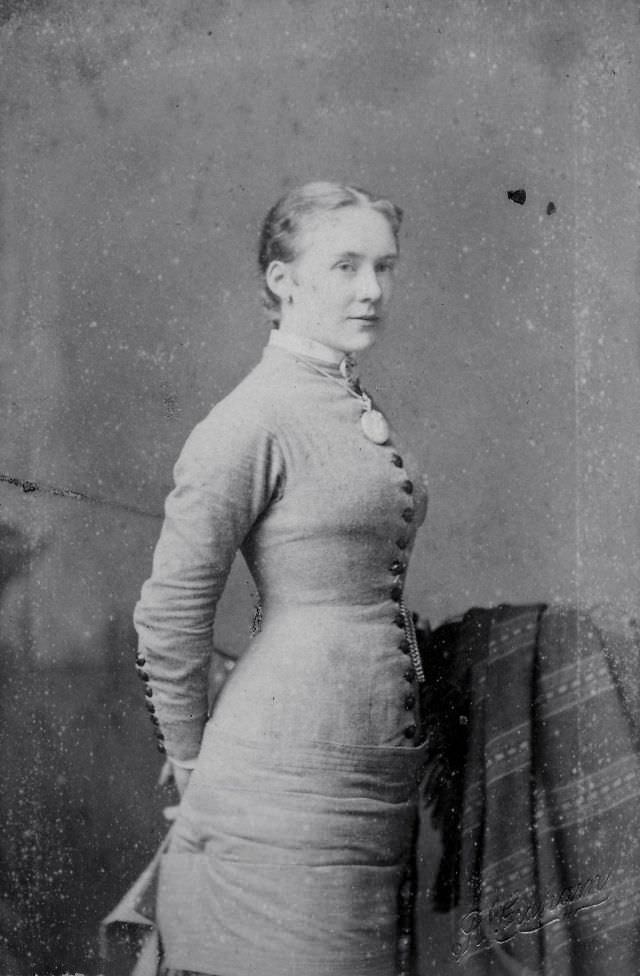
Poised in profile against a plain studio backdrop, a Victorian-era woman stands with the composed confidence expected of late 19th-century portraiture. Her fitted dress fastens in a neat line of buttons, and the smooth, elongated silhouette draws the eye to the tightly defined waist that corsetry was designed to create. Even without lavish props, the careful pose and restrained expression speak to the period’s ideals of discipline, refinement, and respectable femininity.
Corsets were more than hidden structure; they shaped how clothing draped, how posture was held, and how the fashionable figure was displayed in public and in photographs. The rigid tailoring seen here—snug bodice, high collar, and clean seams—suggests the undergarments working beneath the fabric, controlling the torso and emphasizing the hourglass form prized in Victorian fashion. Details like the small pendant at the throat add a personal note, reminding viewers that this was a lived wardrobe, not merely a costume.
As a document of fashion and culture, the image hints at the everyday negotiations between comfort, beauty standards, and social expectation in the Victorian world. Studio portraits like this helped cement the corseted silhouette as a visual norm, circulating ideals of elegance through family albums and commercial photography. For anyone researching Victorian women, tight corsets, and late 19th-century dress, the photograph offers a vivid glimpse of how an “indispensable undergarment” could define an era’s look from the inside out.