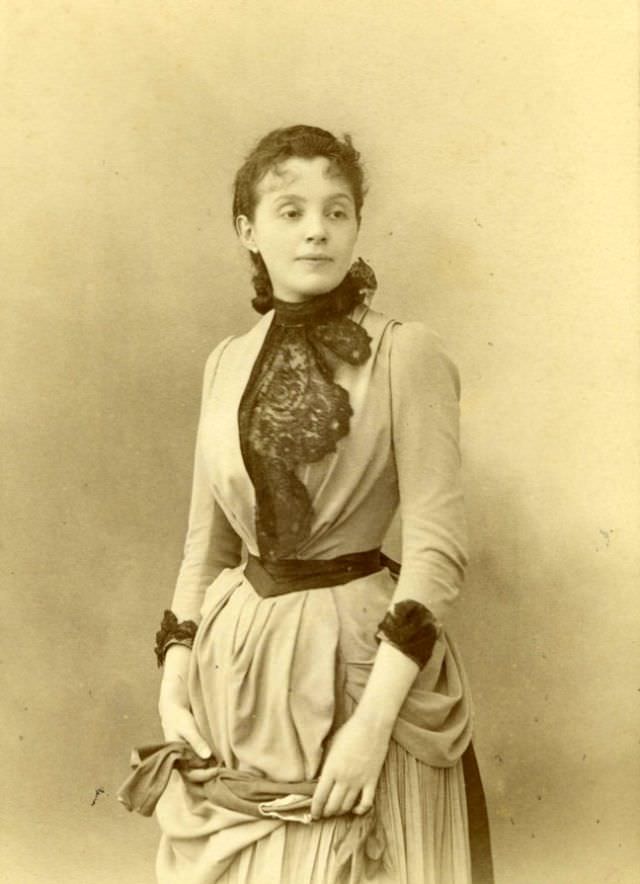
Poised against a plain studio backdrop, a young woman stands in three-quarter view, her gaze turned slightly aside with the calm assurance of a formal portrait sitting. The late 19th-century dress is arranged to emphasize an elongated, tapered waist, with a dark sash cinching the midsection and a high, lace-trimmed bodice framing the throat. Softly puffed sleeves, dark cuffs, and carefully draped skirts create a silhouette that reads instantly as Victorian fashion—elegant, controlled, and meticulously constructed.
Beneath that smooth line of fabric sits the indispensable foundation garment of the era: the corset, shaping not only the body but also the way clothing was cut, worn, and displayed. The close fit through the torso suggests the structured support that defined Victorian women’s style, while the ornate lace and layered textiles hint at the period’s love of detail even in everyday attire. In portraits like this, the corseted form becomes a visual shorthand for respectability and refinement, as important to the sitter’s public image as her hairstyle or posture.
Beyond the fashion, the photograph offers a window into the culture that made tight waists and sculpted silhouettes a social ideal. Studio portraits were keepsakes and statements, and the careful styling—belted waist, high collar, and controlled drapery—reflects how women navigated expectations of modesty, beauty, and status. For modern viewers searching Victorian corsets, 19th-century women’s clothing, or historical underwear and fashion history, the image underscores how foundational garments quietly shaped an entire age’s look and lived experience.