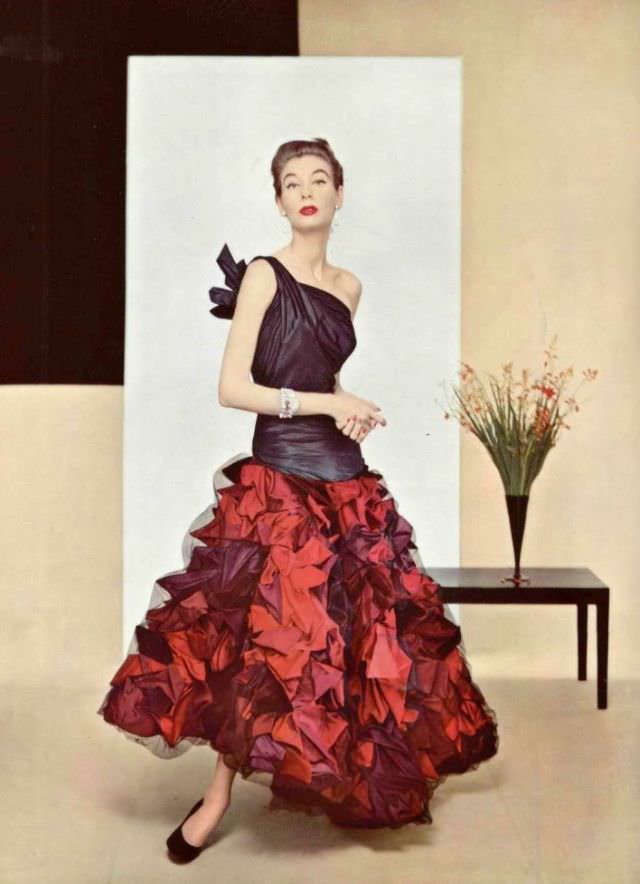
Against a pared-back studio set, a poised model stands before a tall white panel, her gaze lifted and her posture composed, letting the couture do the talking. The evening gown credited to Grès in 1952 centers on an elongated, body-skimming bodice in dark taffeta that sweeps over one shoulder and knots at the back, a sculptural gesture that reads as both restraint and drama. Small details—bracelet at the wrist, classic pumps, and a polished coiffure—anchor the look in mid-century elegance and make the silhouette feel deliberately modern for its time.
Below the waist, the dress blooms into an extraordinary skirt built in “shells” of fabric, layered in several tones that shift between deep wine, crimson, and shadowed violet. The textured construction creates a rhythmic, petal-like surface, as if the gown has been gathered from folded ribbons and soft architectural pleats, then controlled under a fine veil of black tulle. Even in a still photograph, the interplay of taffeta sheen and tulle haze suggests movement—light catching on edges, shadows pooling in the folds—highlighting the painstaking handwork associated with haute couture.
Mid-century fashion photography often balanced theatrical craftsmanship with minimalist staging, and that contrast is evident here: a simple side table and a vase of flowers serve as quiet counterpoints to a dress designed to command a room. The image speaks to the enduring legacy of Madame Grès, celebrated for turning fabric into sculpture while preserving a sense of effortless grace. For readers searching fashion history, 1950s couture, or Grès evening gowns, this portrait offers a vivid glimpse of postwar luxury and the technical imagination behind it.