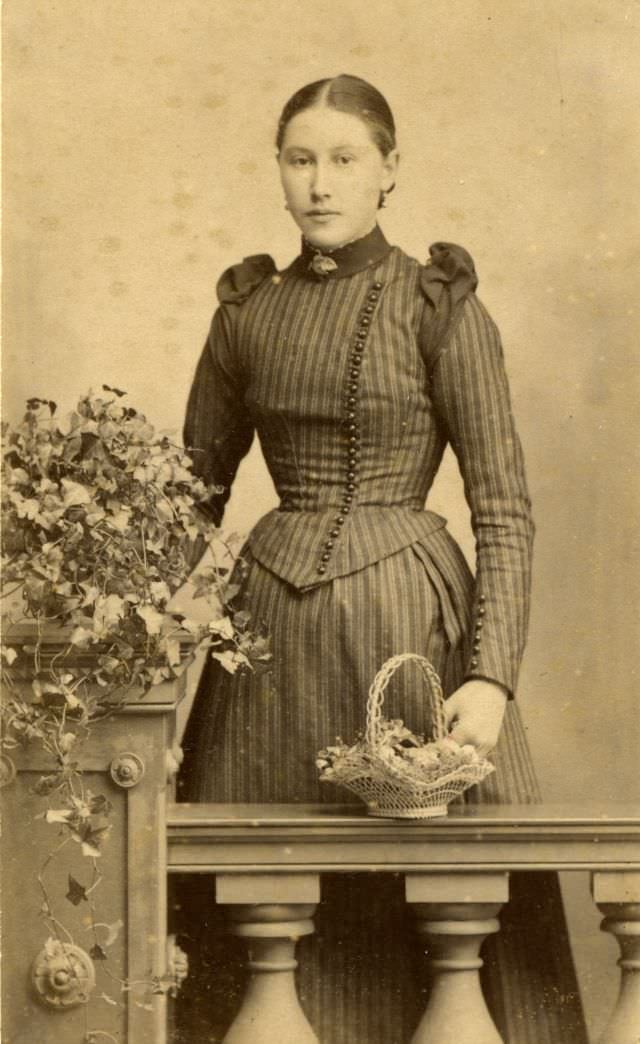
Poised beside a studio balustrade draped with ivy, a young woman faces the camera with a calm, direct gaze that feels both formal and intimate. The sepia tones soften the scene, while the carefully arranged props—a small basket of flowers and the decorative greenery—signal the late 19th-century taste for staged “garden” portraits indoors. Her hair is neatly parted and pinned back, and the high collar and long sleeves reinforce the modest, composed silhouette prized in Victorian fashion.
Attention naturally settles on the sharply fitted bodice, where the dense row of buttons and the snug, elongated waist reveal the work of a tight corset beneath. Vertical striping emphasizes height and slenderness, and the structured peplum-like shaping at the hips hints at the period’s evolving lines as dressmaking balanced decoration with engineered fit. In images like this, the corset is not visible as an object, yet it is unmistakable as a force—creating posture, controlling contours, and shaping how clothing sits on the body.
As a piece of Victorian-era undergarment history, the portrait speaks to more than beauty standards; it reflects the everyday discipline and craftsmanship behind women’s clothing in the late 19th century. Corsetry was marketed as essential—supportive, “correct,” and fashionable—while also demanding comfort trade-offs that modern viewers can easily overlook. The result is a striking document of Fashion & Culture: a single sitter, impeccably dressed, embodying the era’s ideals of refinement through structure, fabric, and restraint.